01
Smart Scan
Read diagnostic trouble codes and turn raw vehicle data into an organized report with severity, likely causes, and suggested next steps.
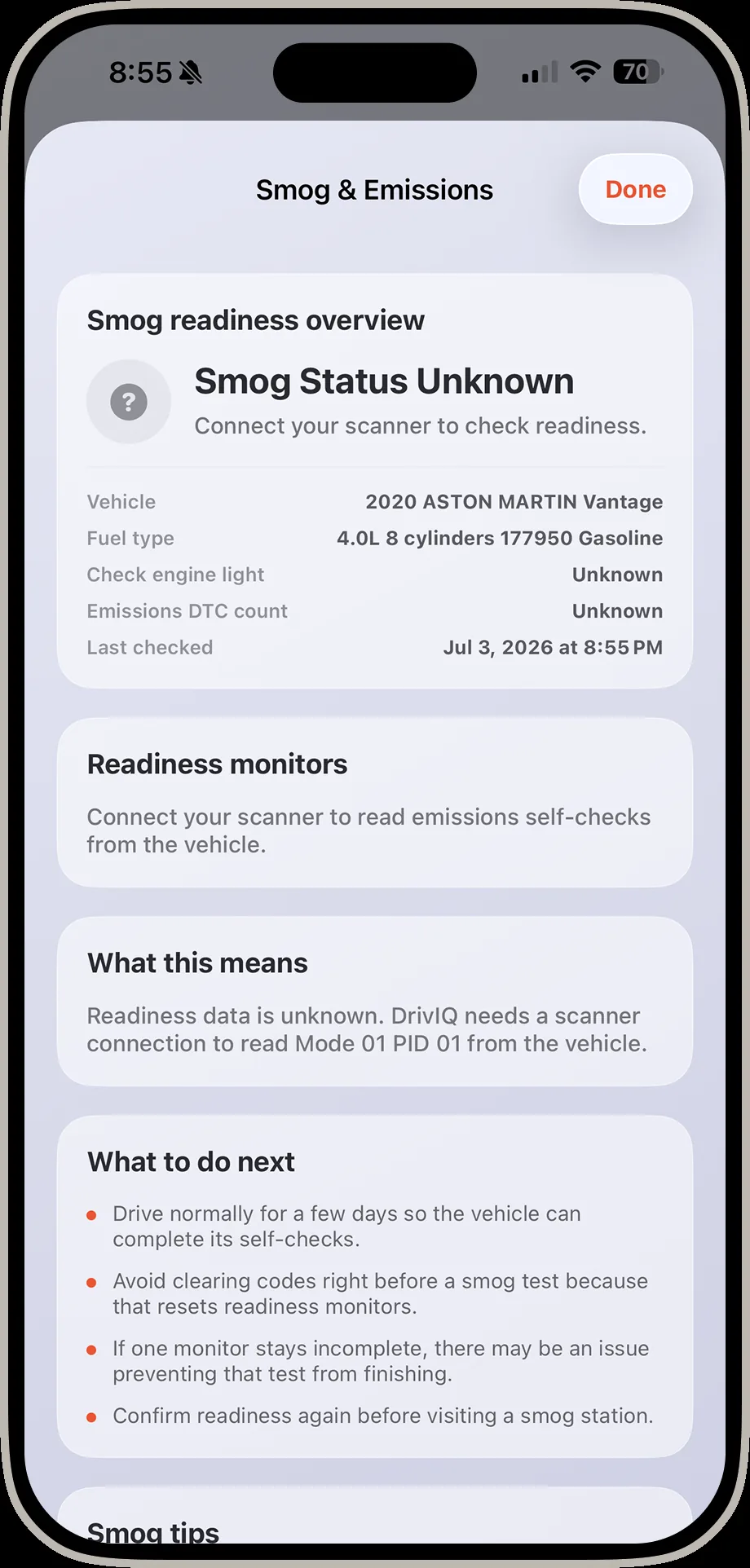
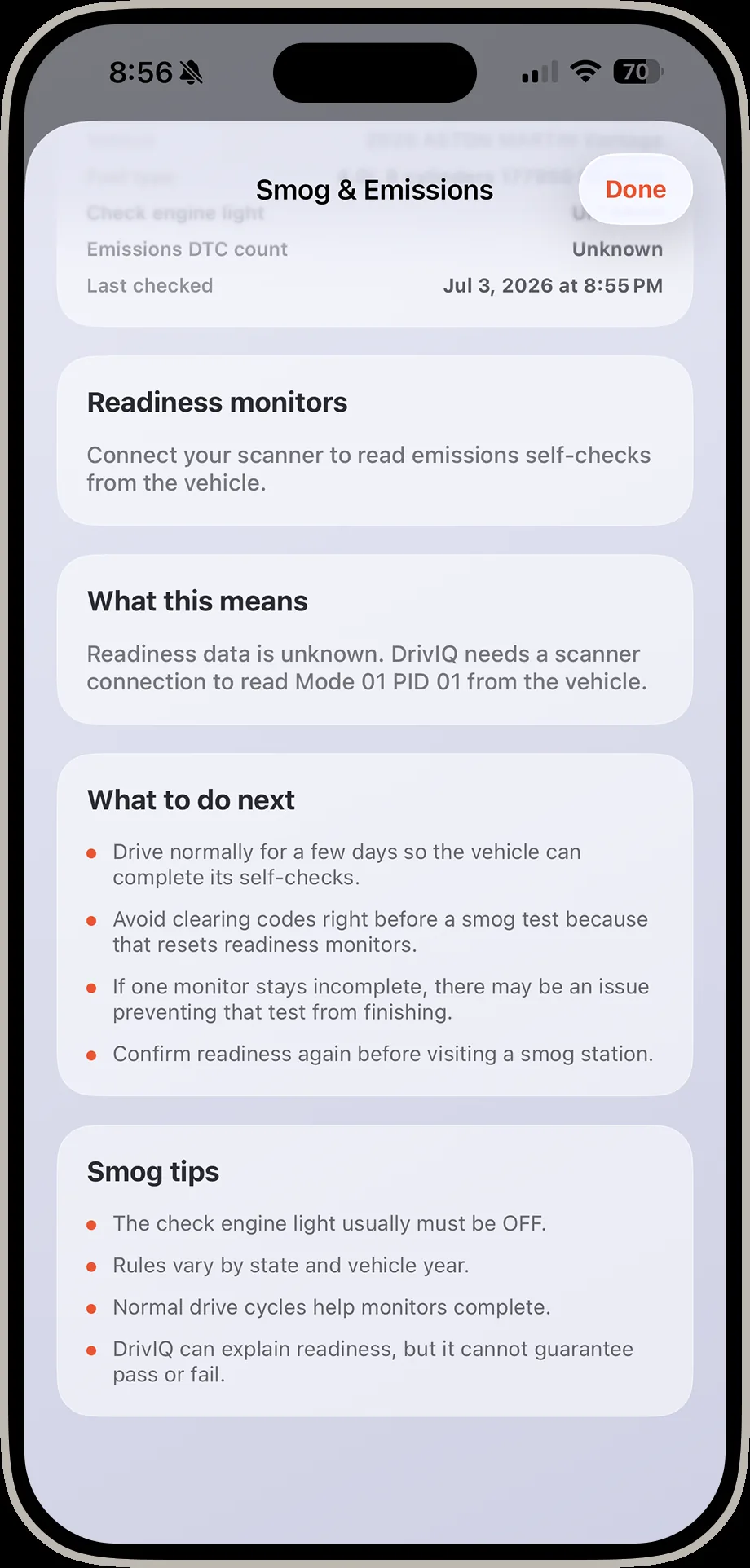
Know what's wrong before the mechanic does. Know if you're being charged fairly. Scan codes, review repair quotes, check smog readiness, research parts, and keep every vehicle report in one driver-focused app.
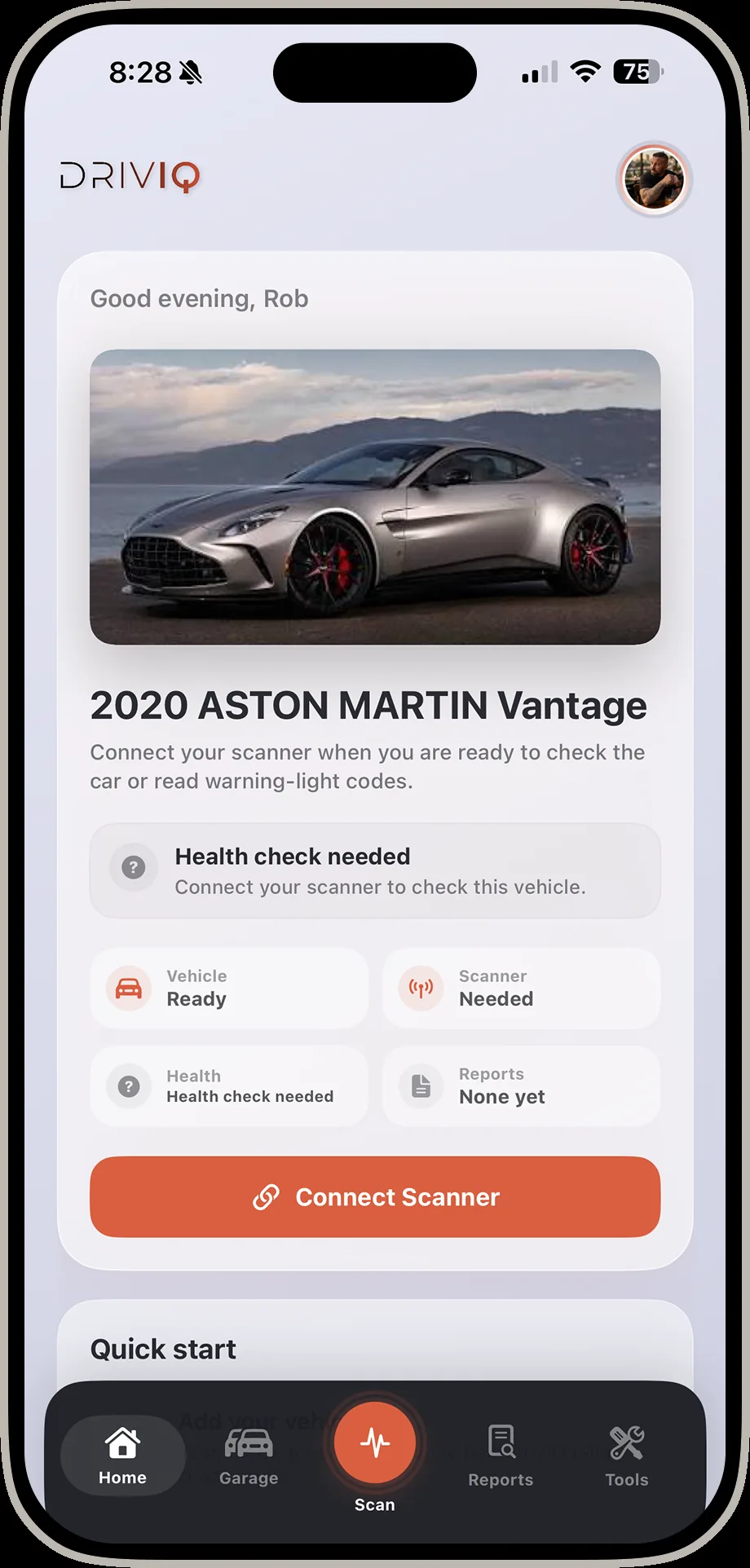
Plain-English code explanations with likely causes and next steps.
Supported real-time data from compatible Bluetooth OBD-II adapters.
Repair proposal review built for everyday drivers.
Saved vehicles, reports, notes, and maintenance context.
DrivIQ gives drivers context before the tow, the repair authorization, the parts order, or the emissions test.
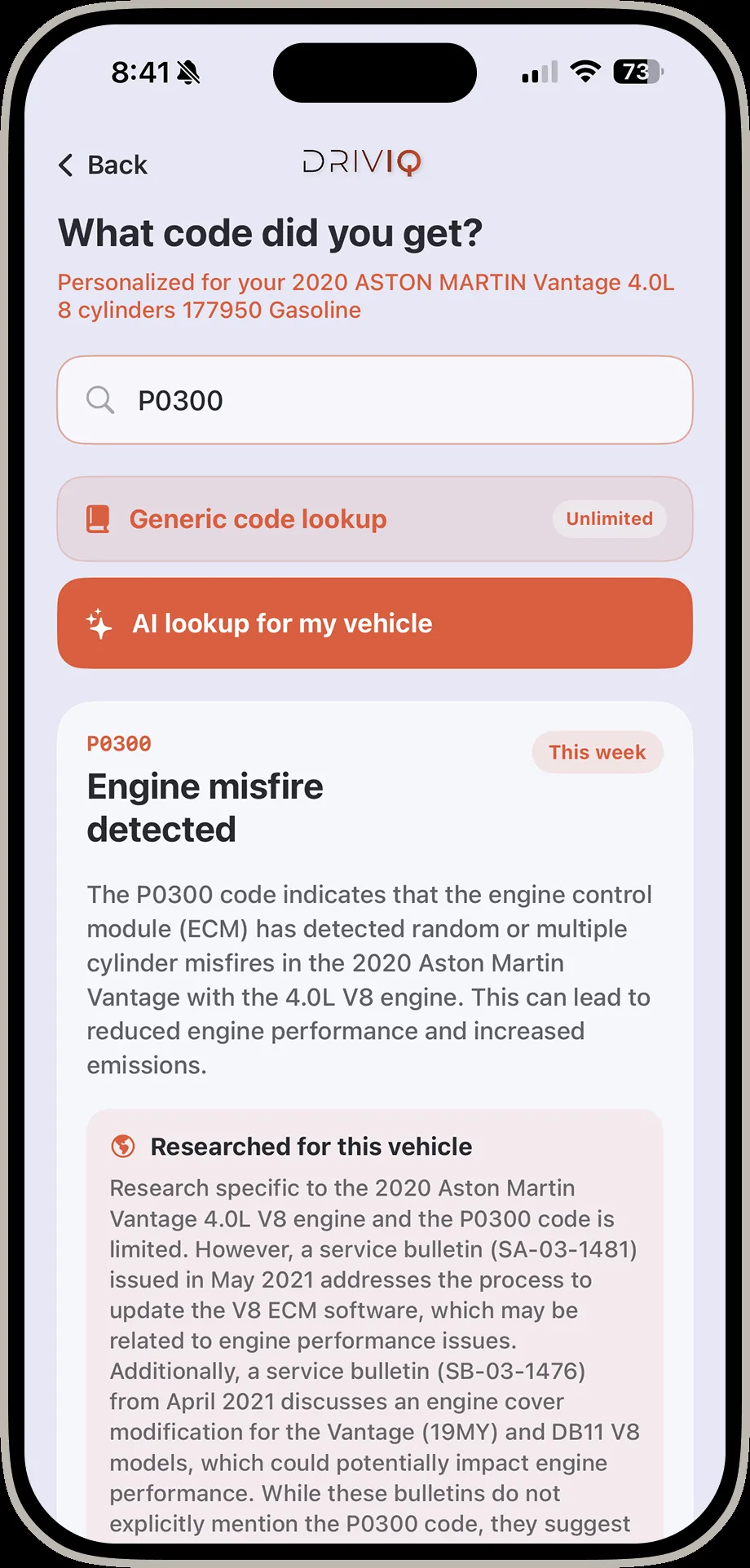
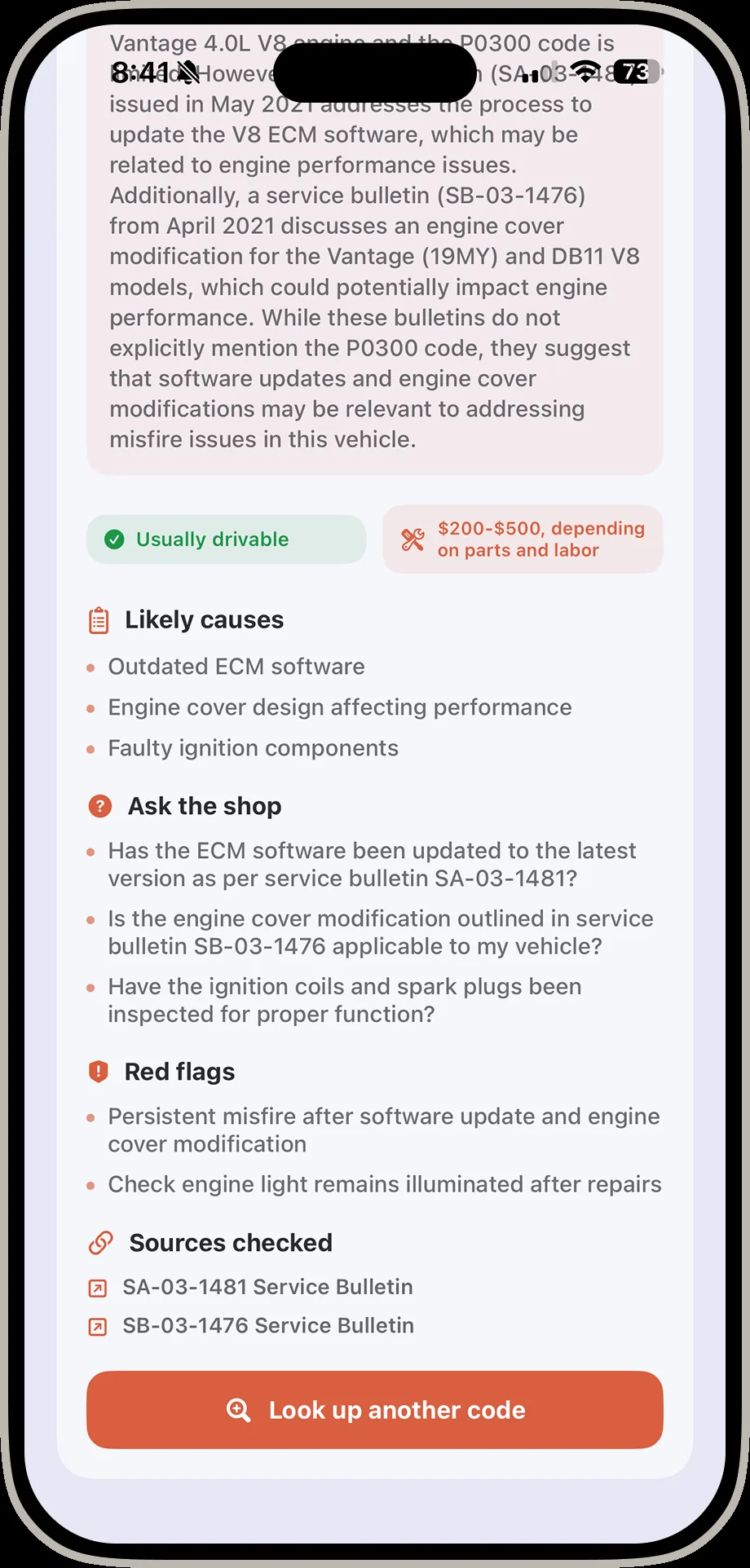
Read diagnostic trouble codes and turn raw vehicle data into an organized report with severity, likely causes, and suggested next steps.
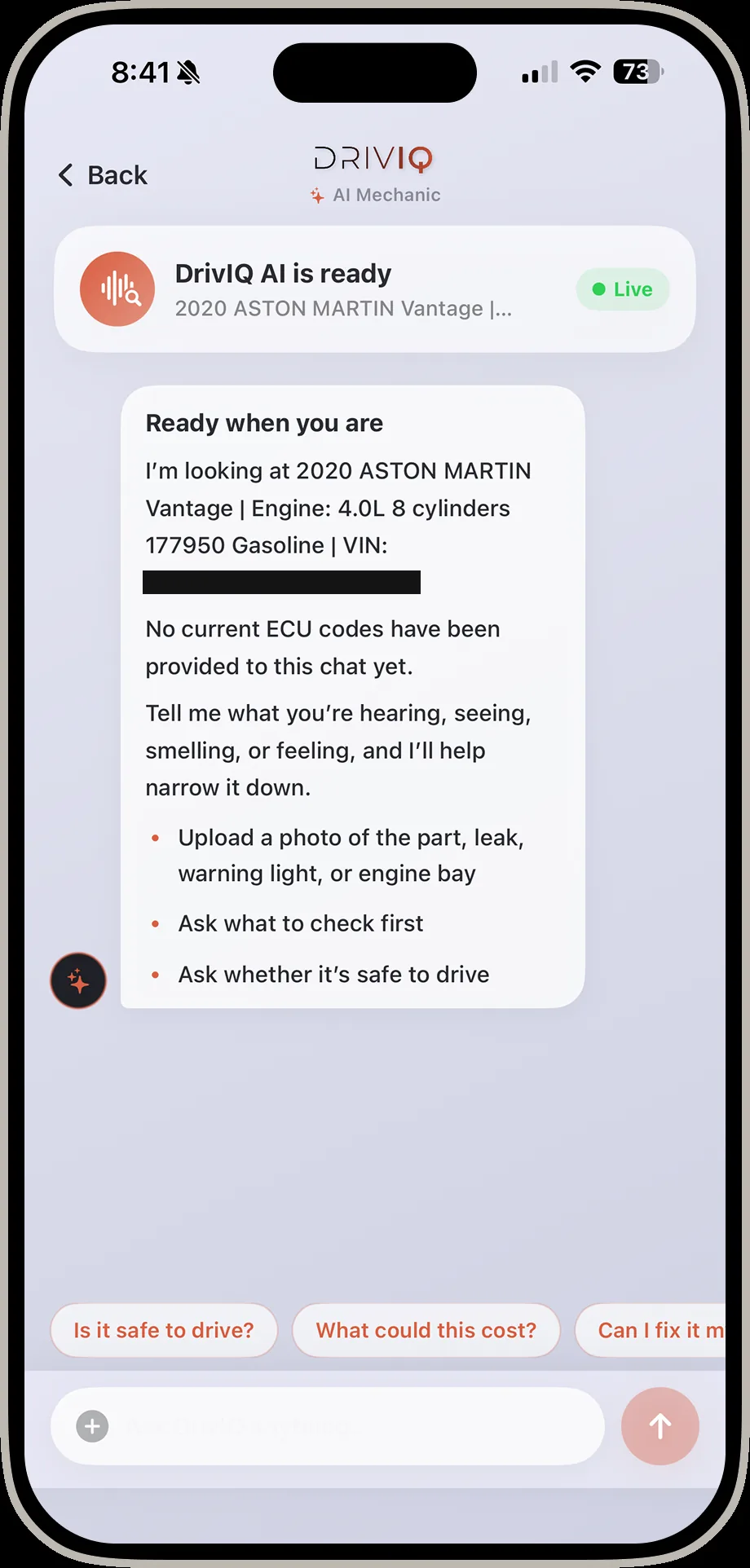
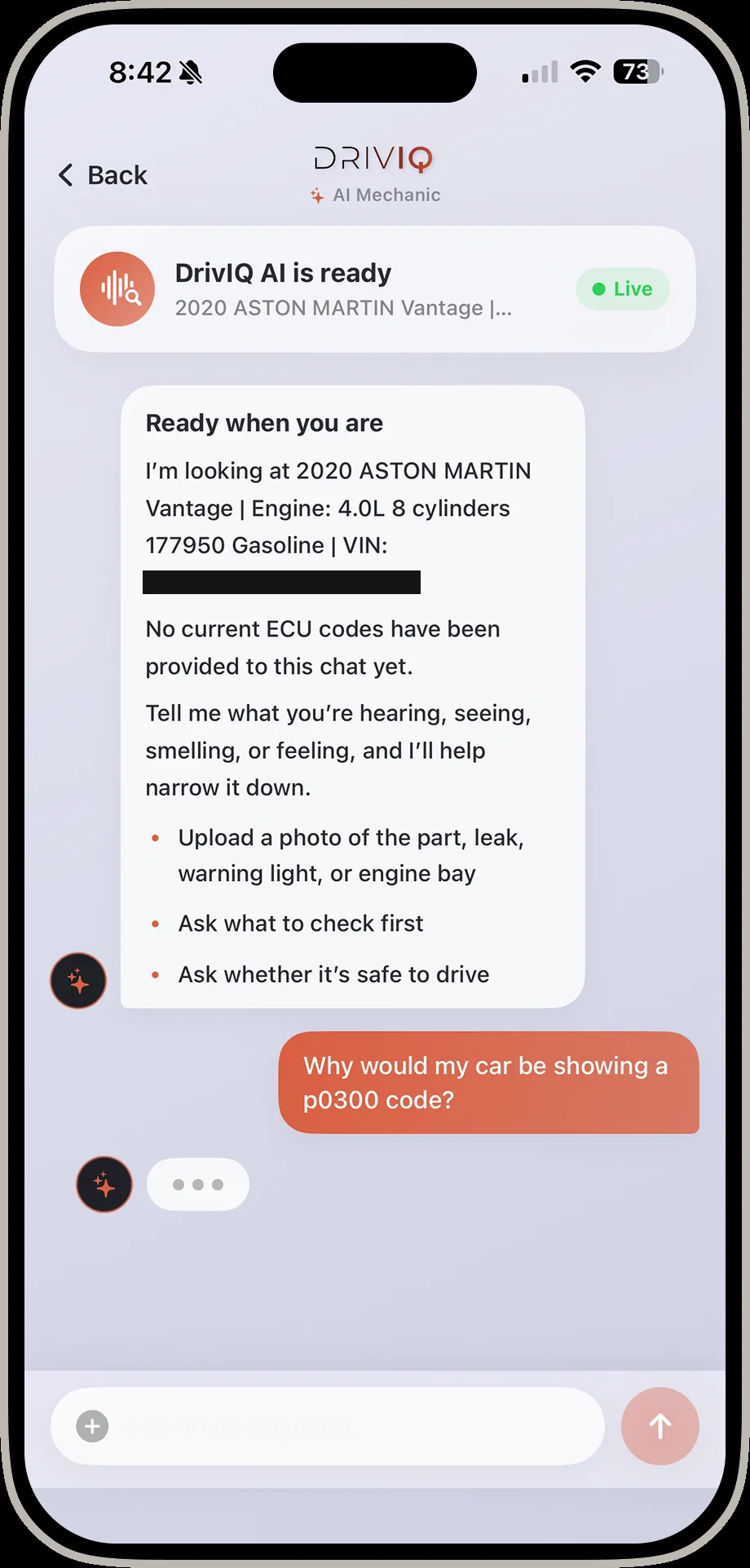
Ask follow-up questions in normal language and get practical explanations tailored to the vehicle issue you are trying to understand.
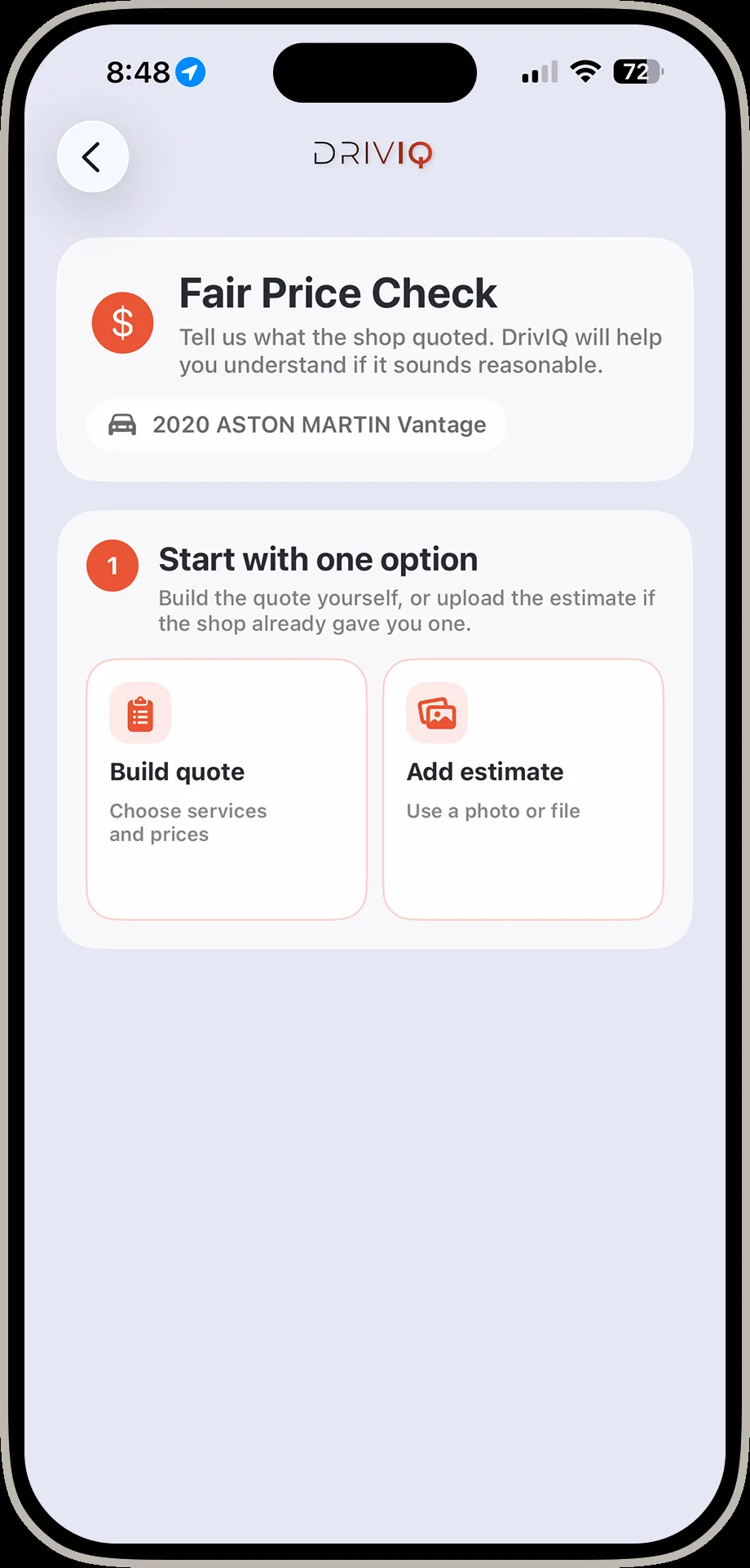
Review repair quotes with pricing context so confusing line items, labor assumptions, and parts choices are easier to challenge.
Research fitment-aware part context and reference information before buying the wrong thing or approving the wrong replacement.
Watch supported live values like RPM, coolant temperature, speed, and readiness data from compatible OBD-II hardware.
Point your camera at the engine bay and let DrivIQ identify and track components in real time. In active development — not in the app yet.
Nine flows, real app screens, zero renders. Open any category to see it end to end.
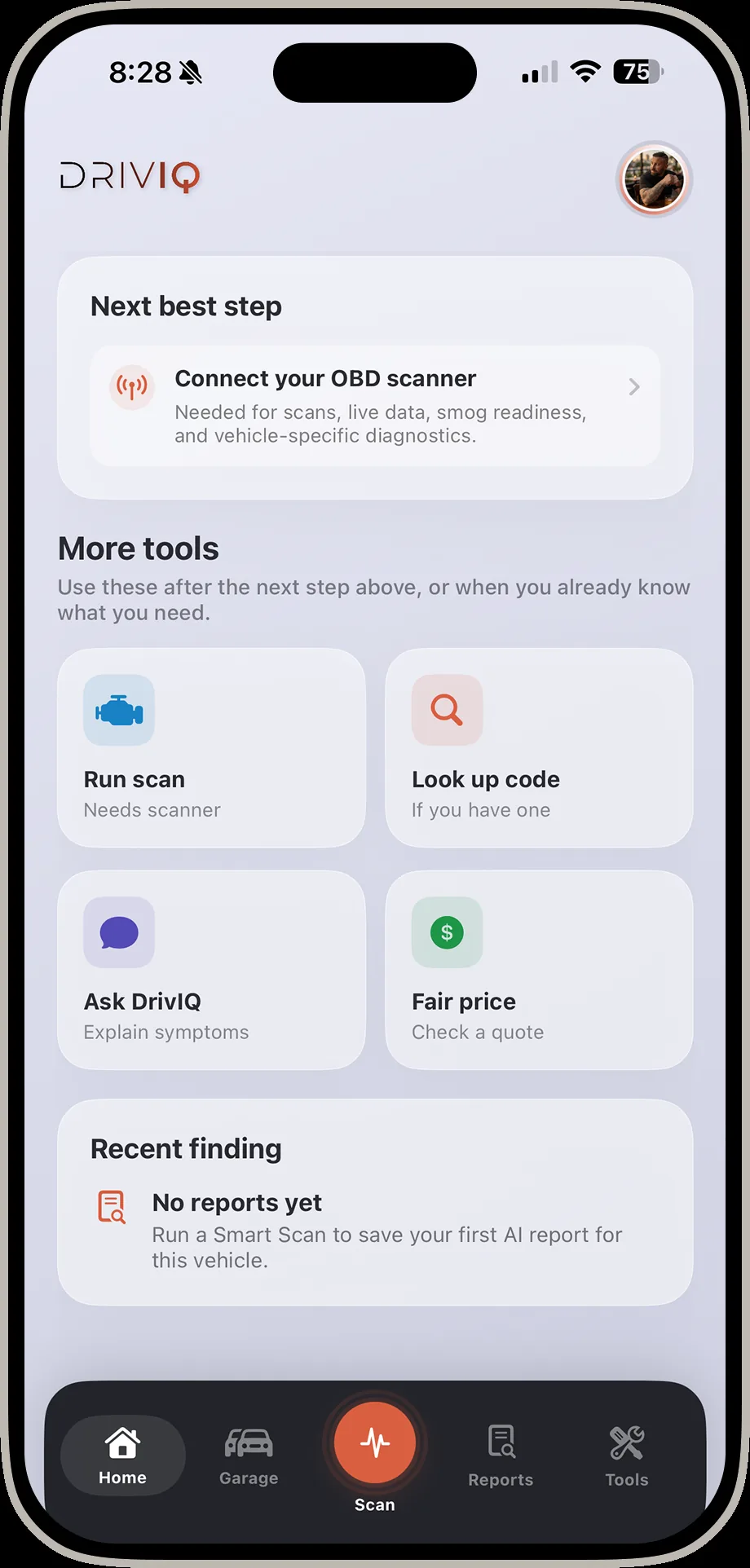
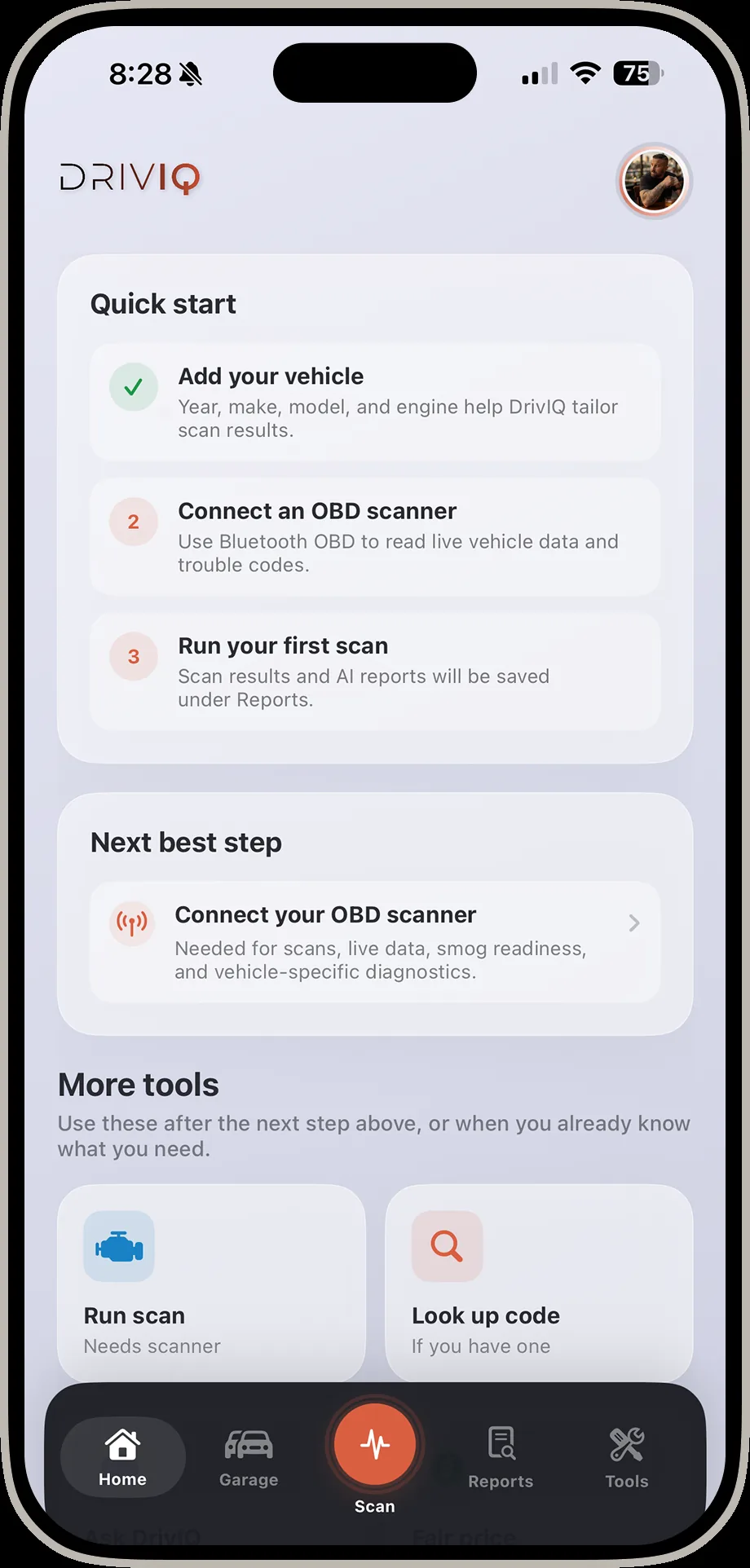
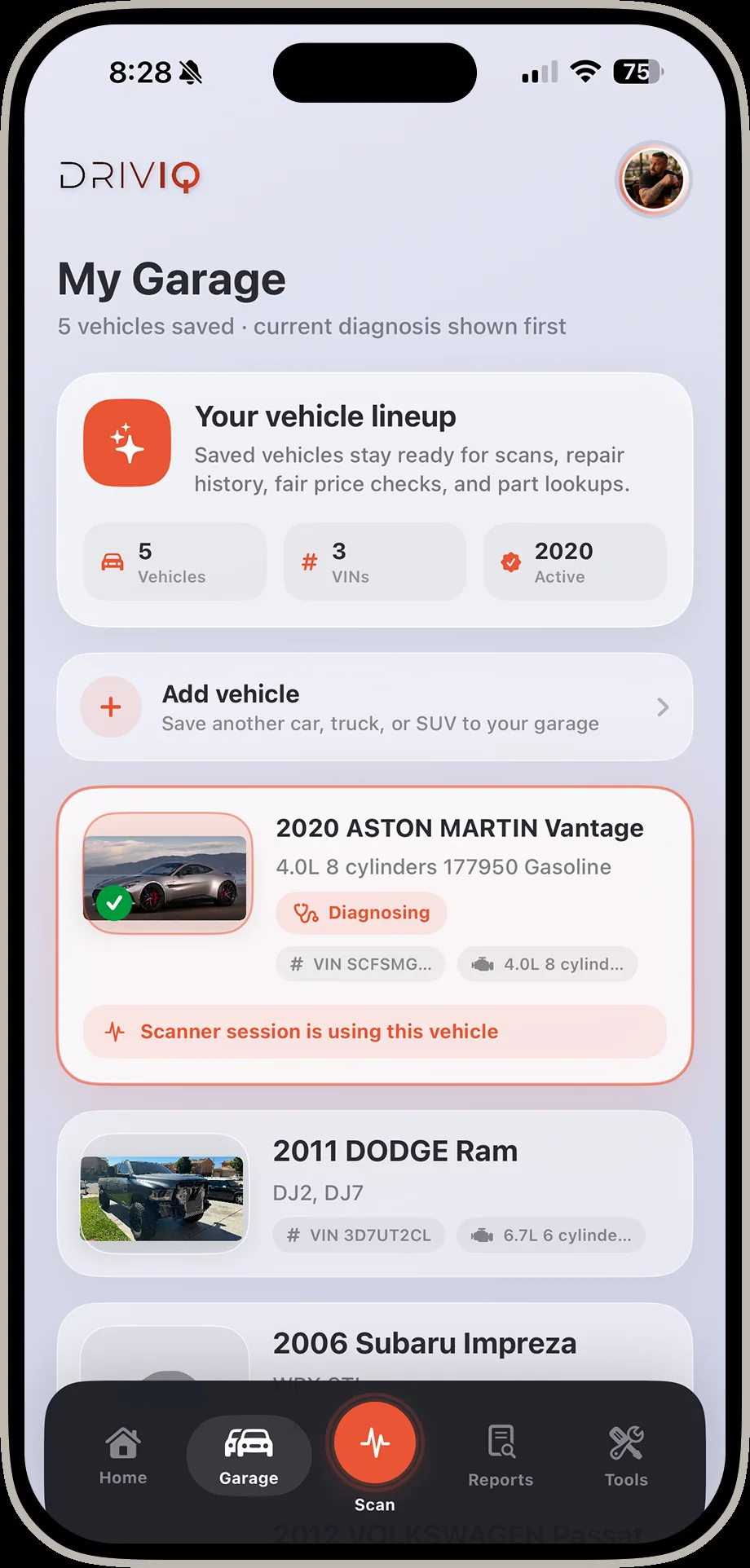
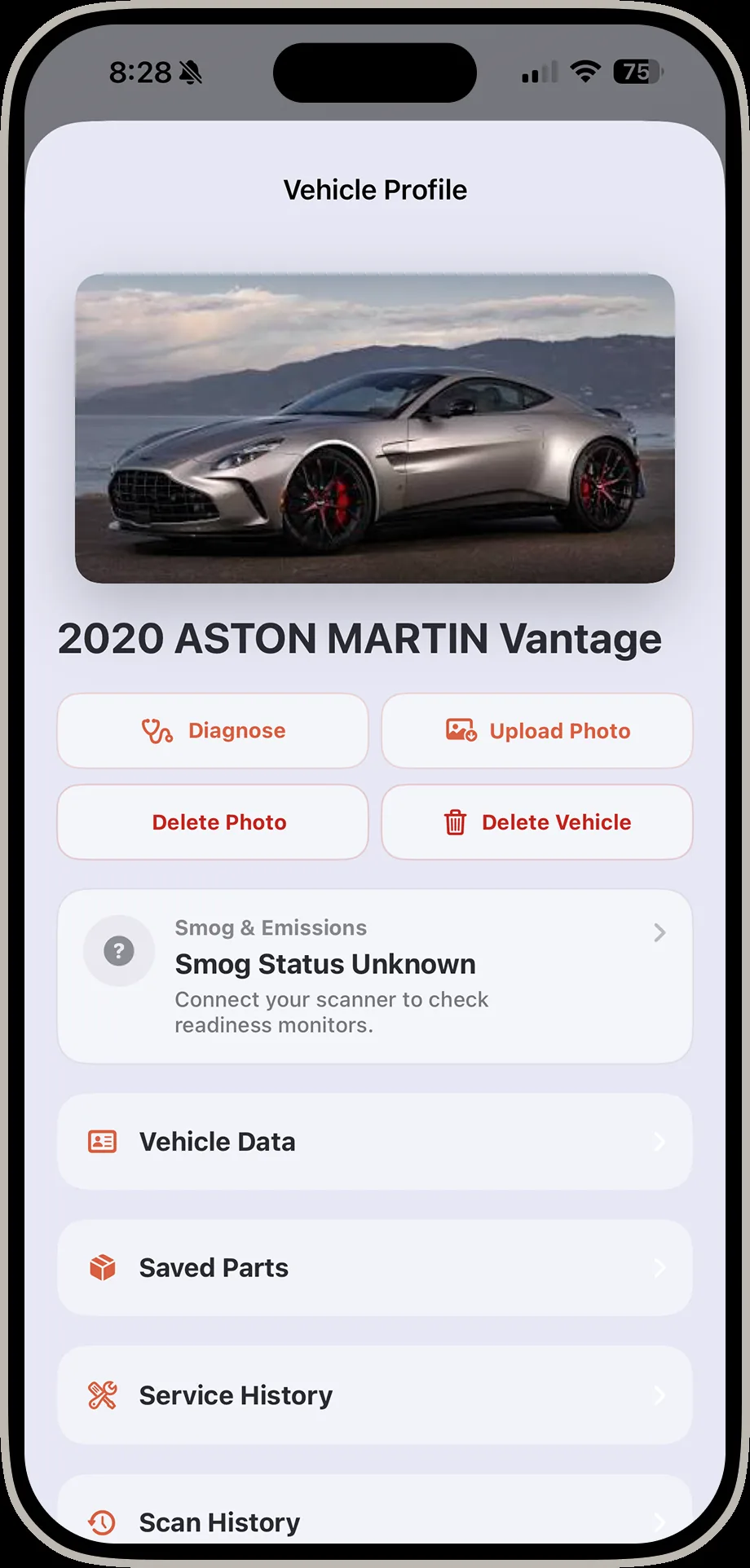
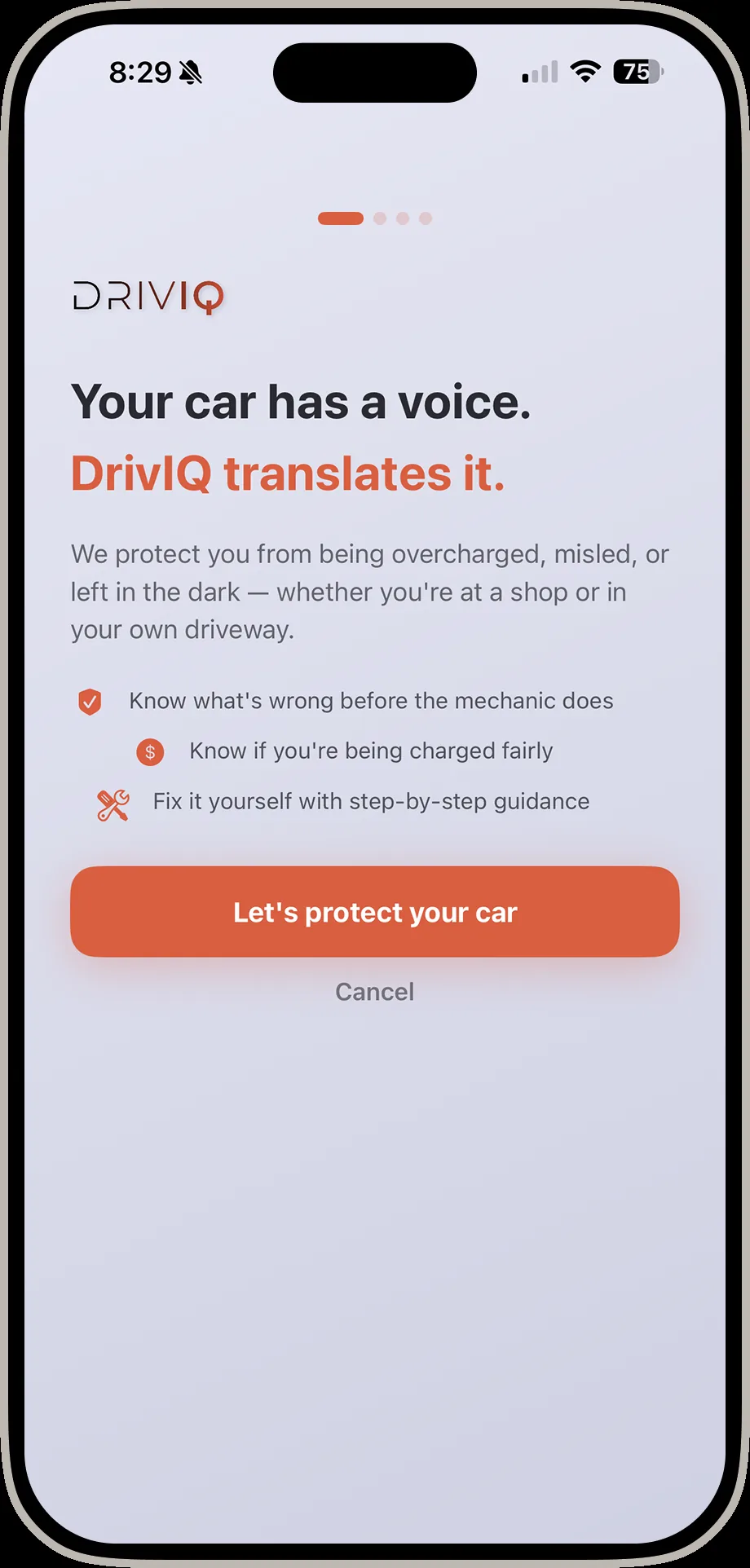
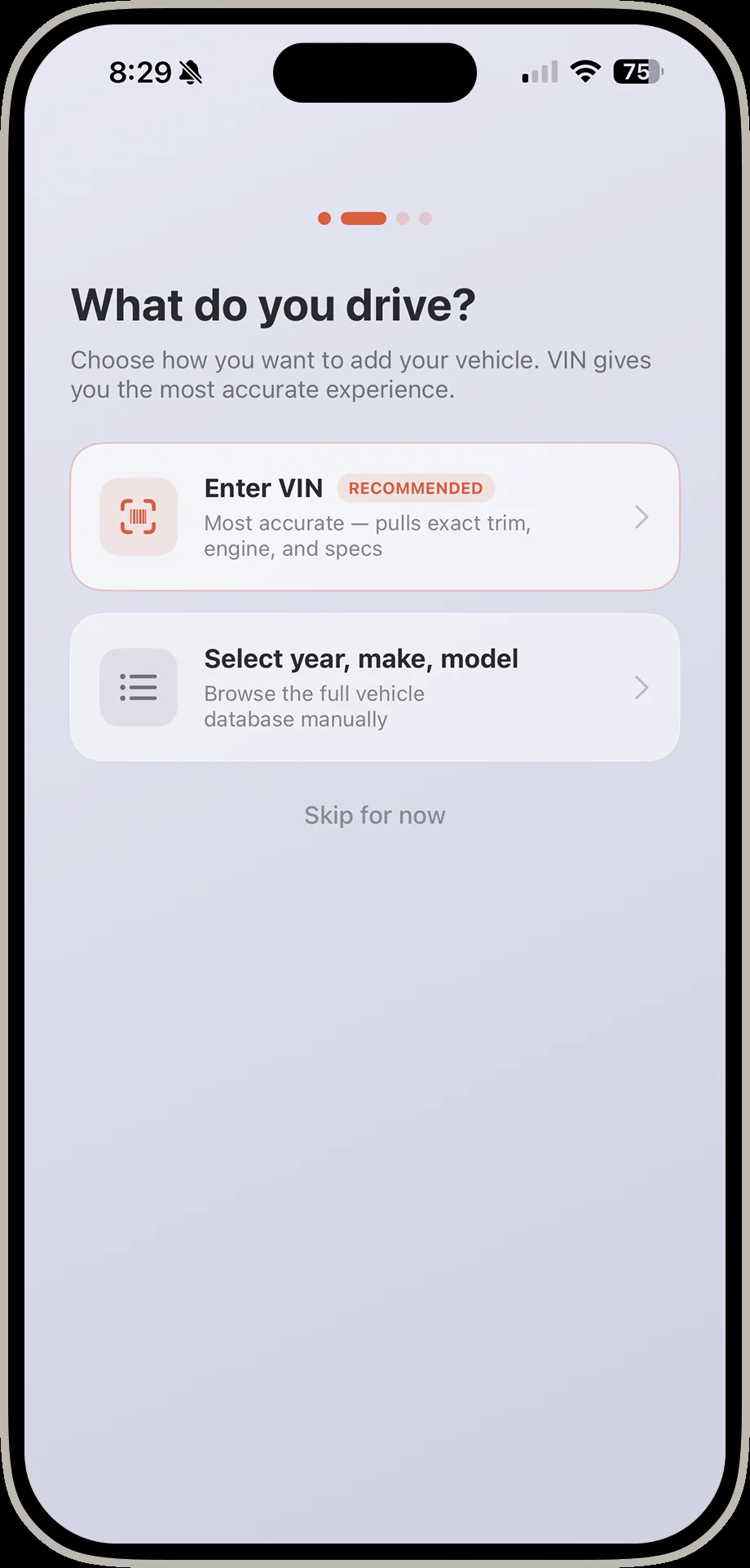
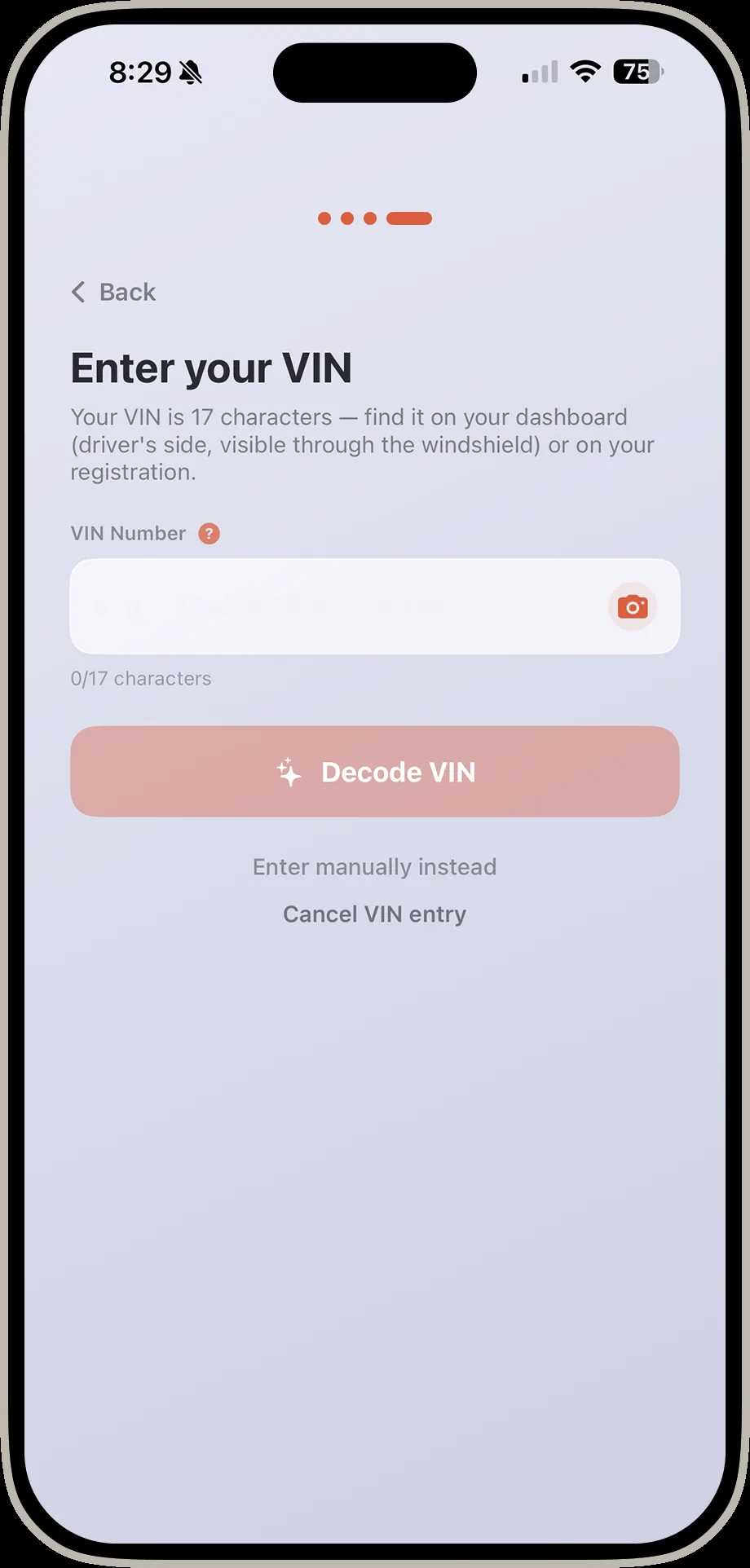
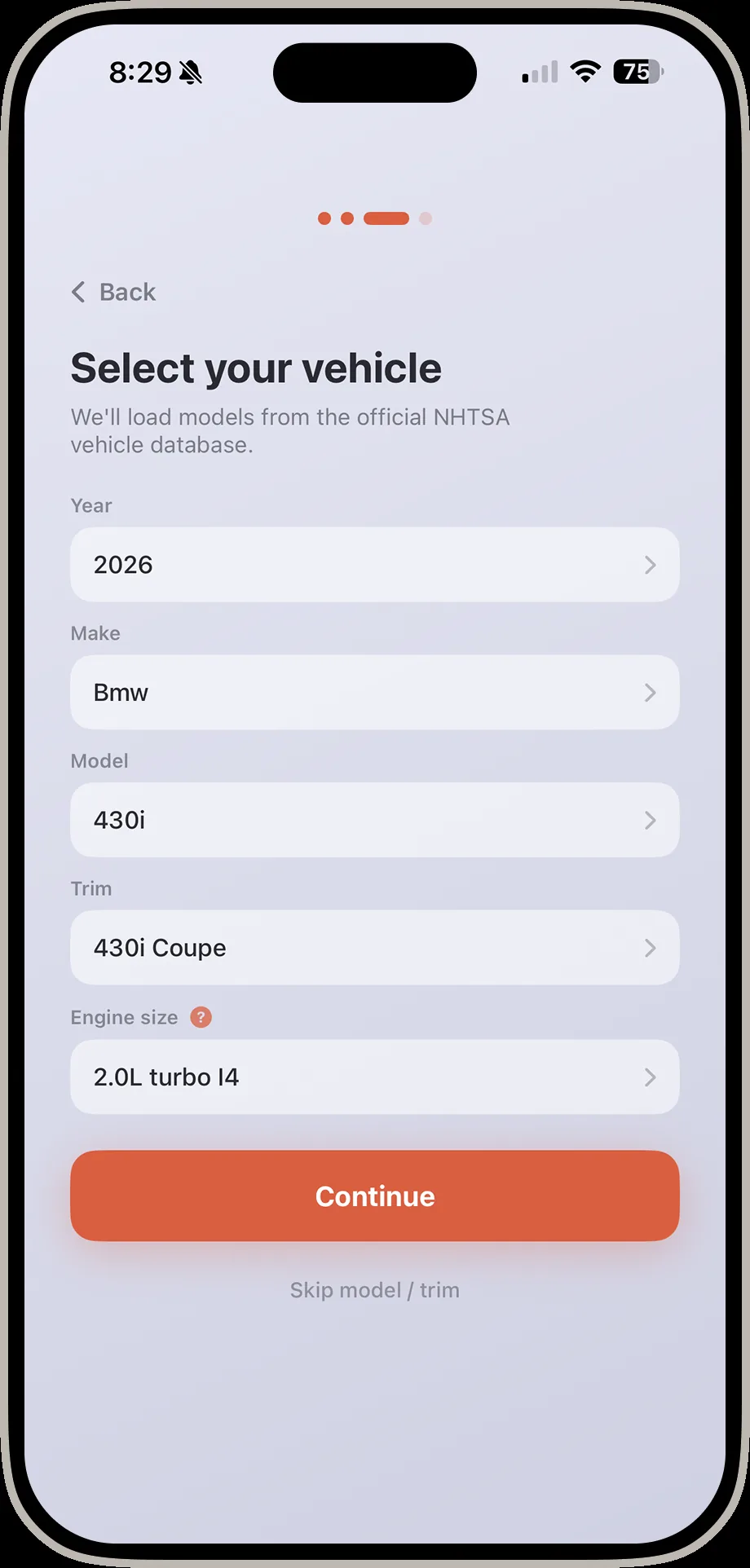
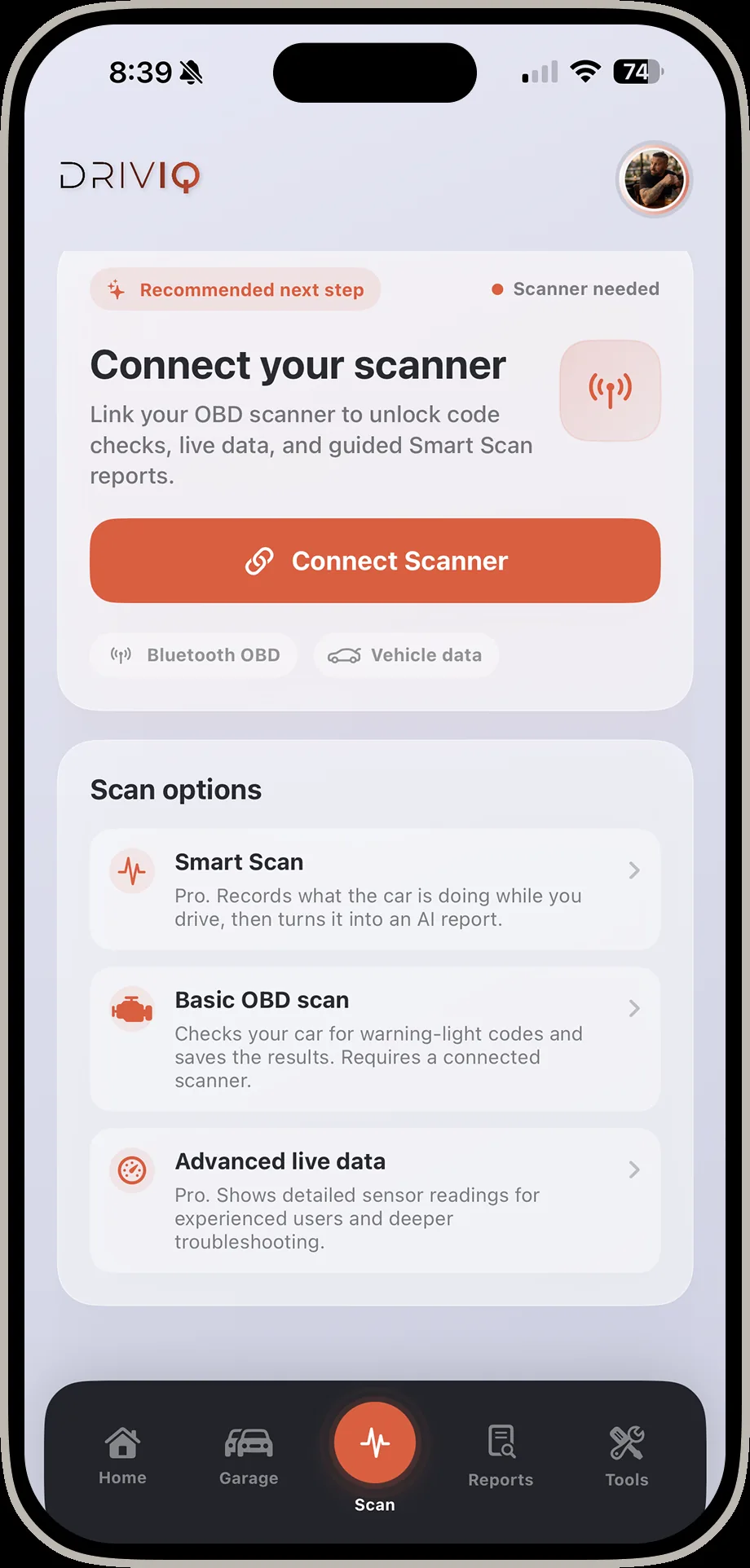
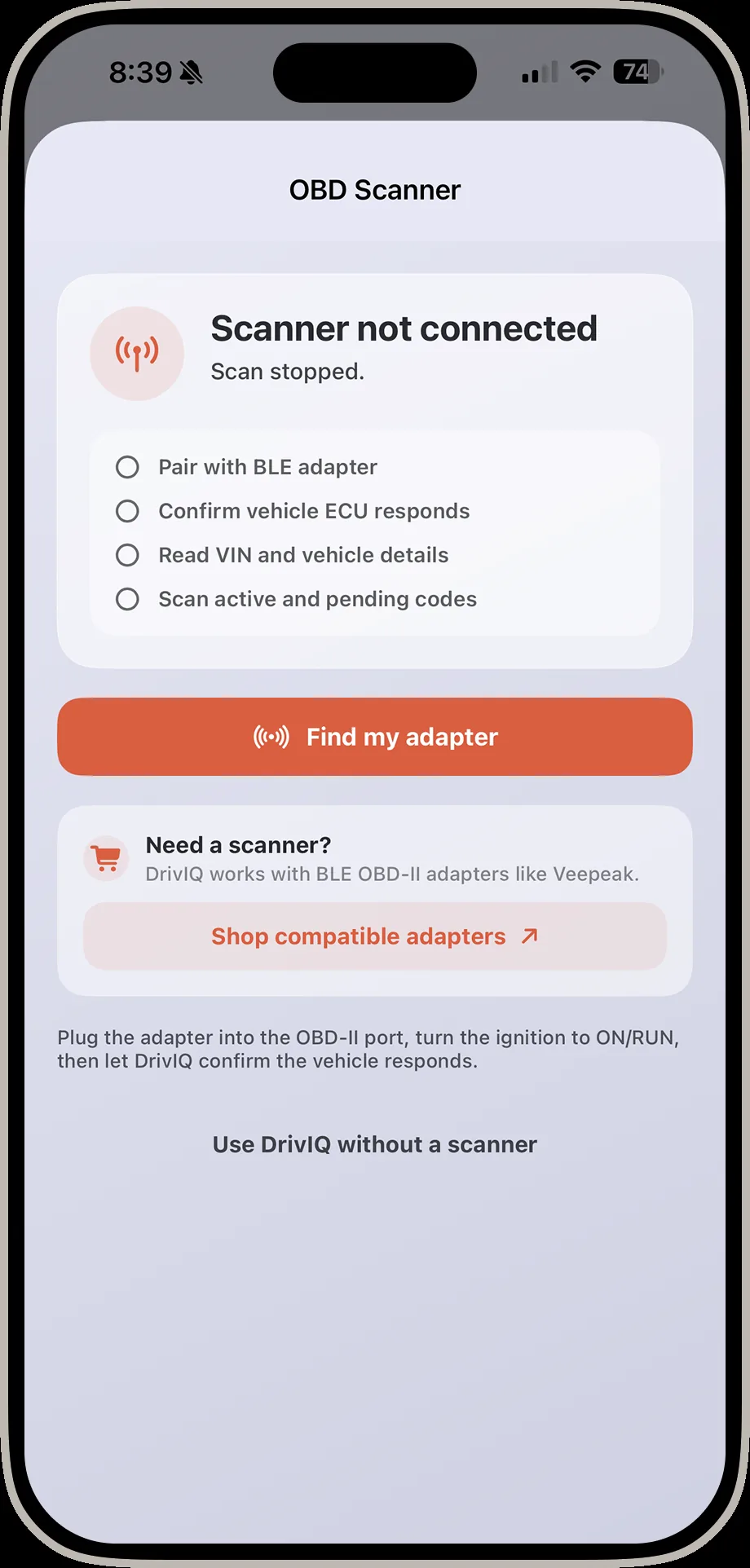
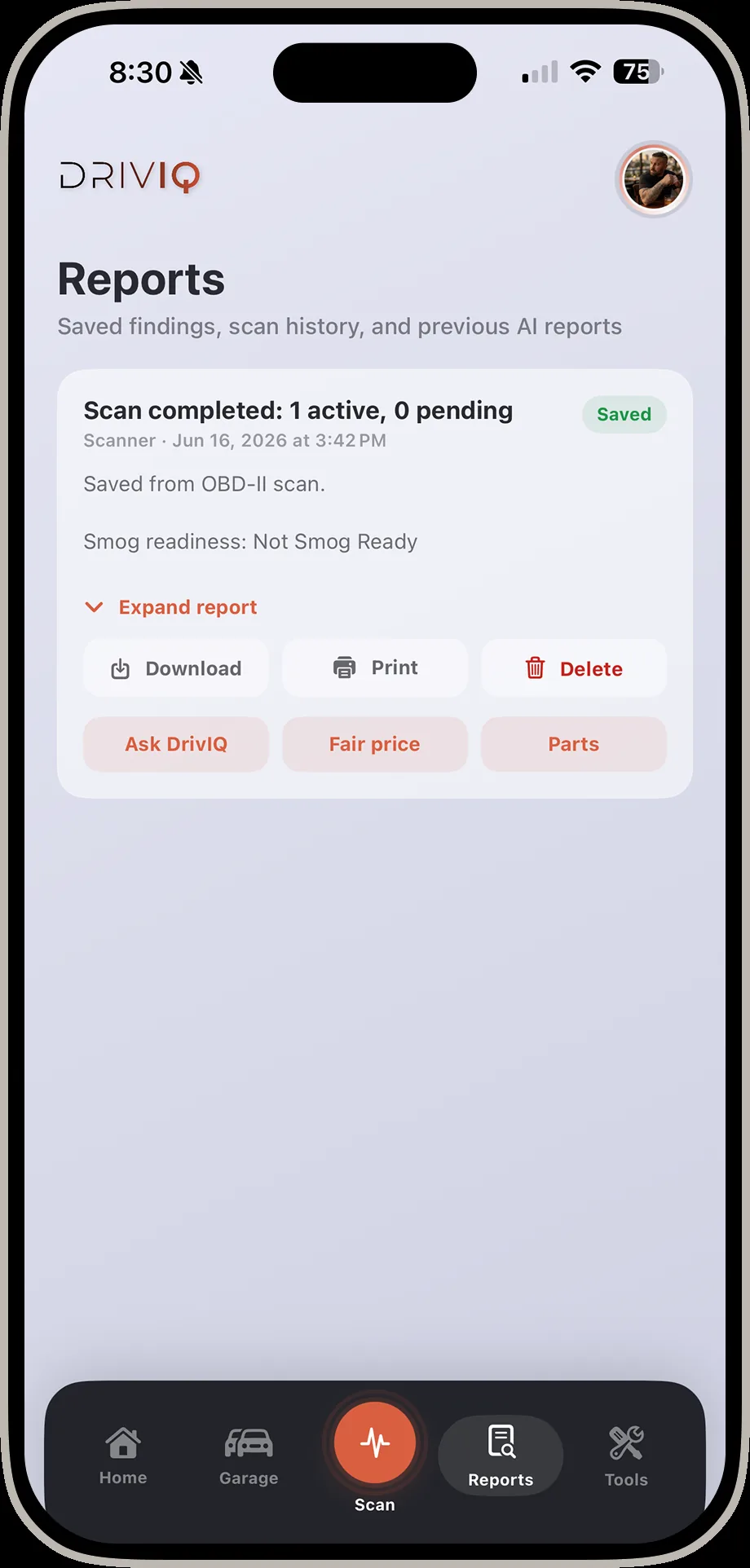
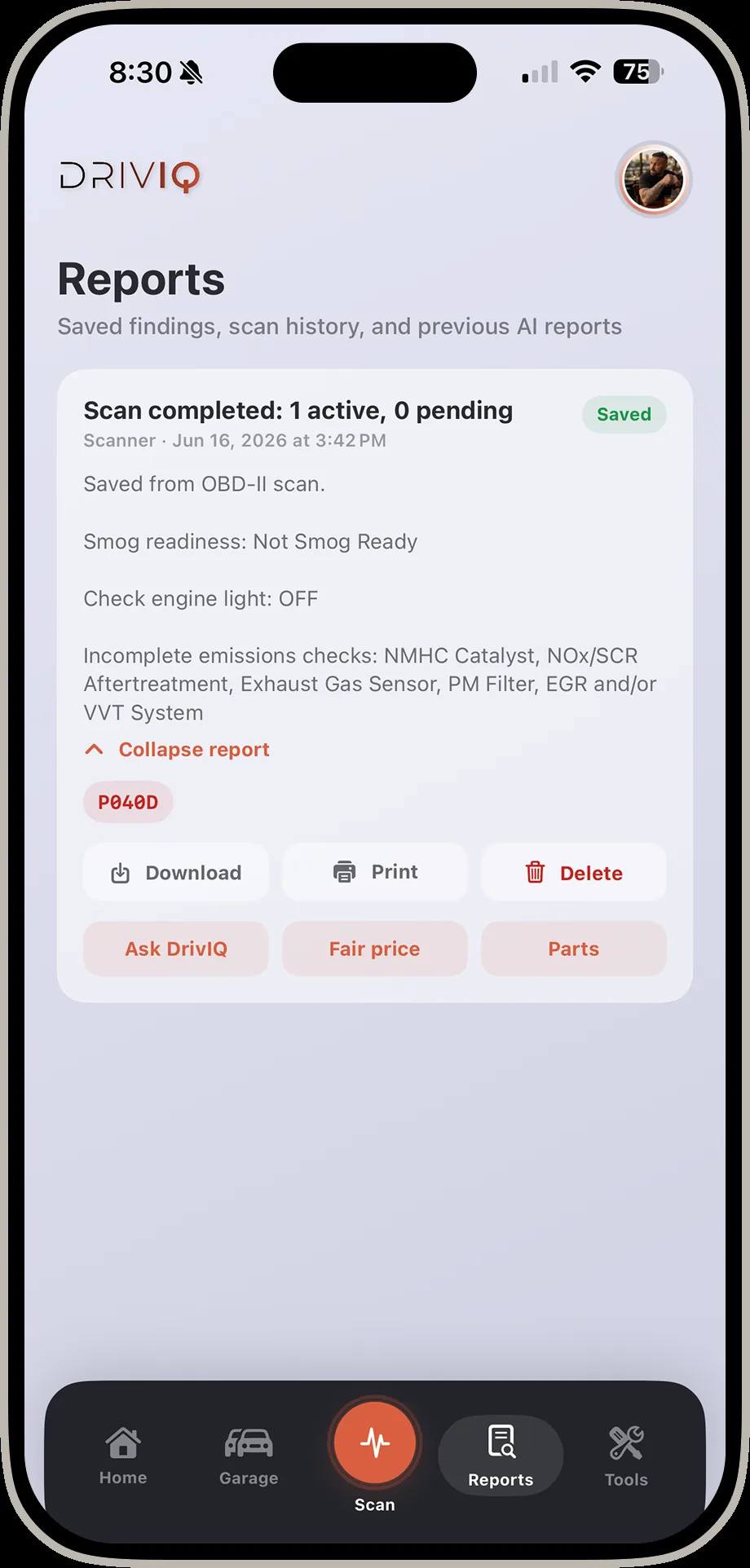
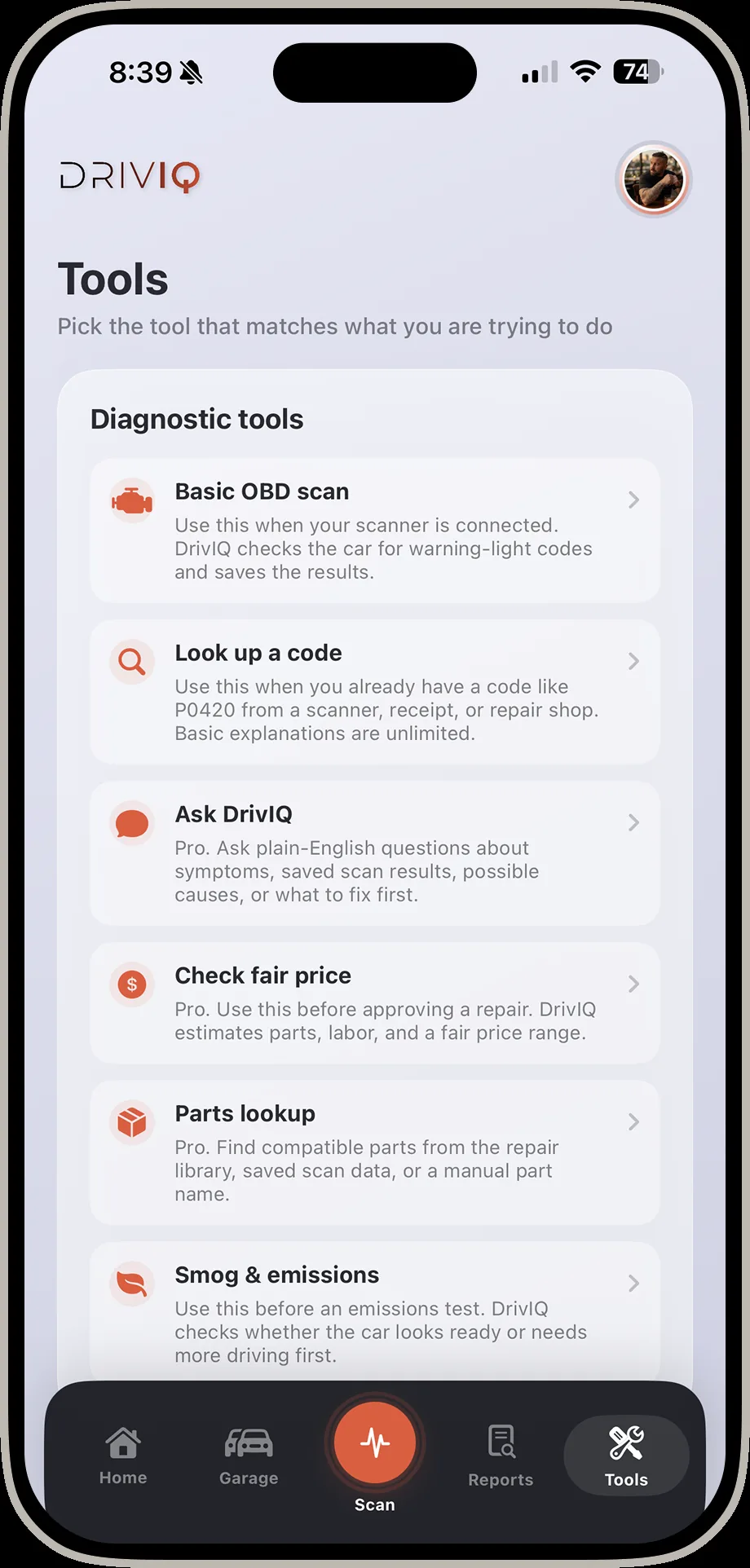
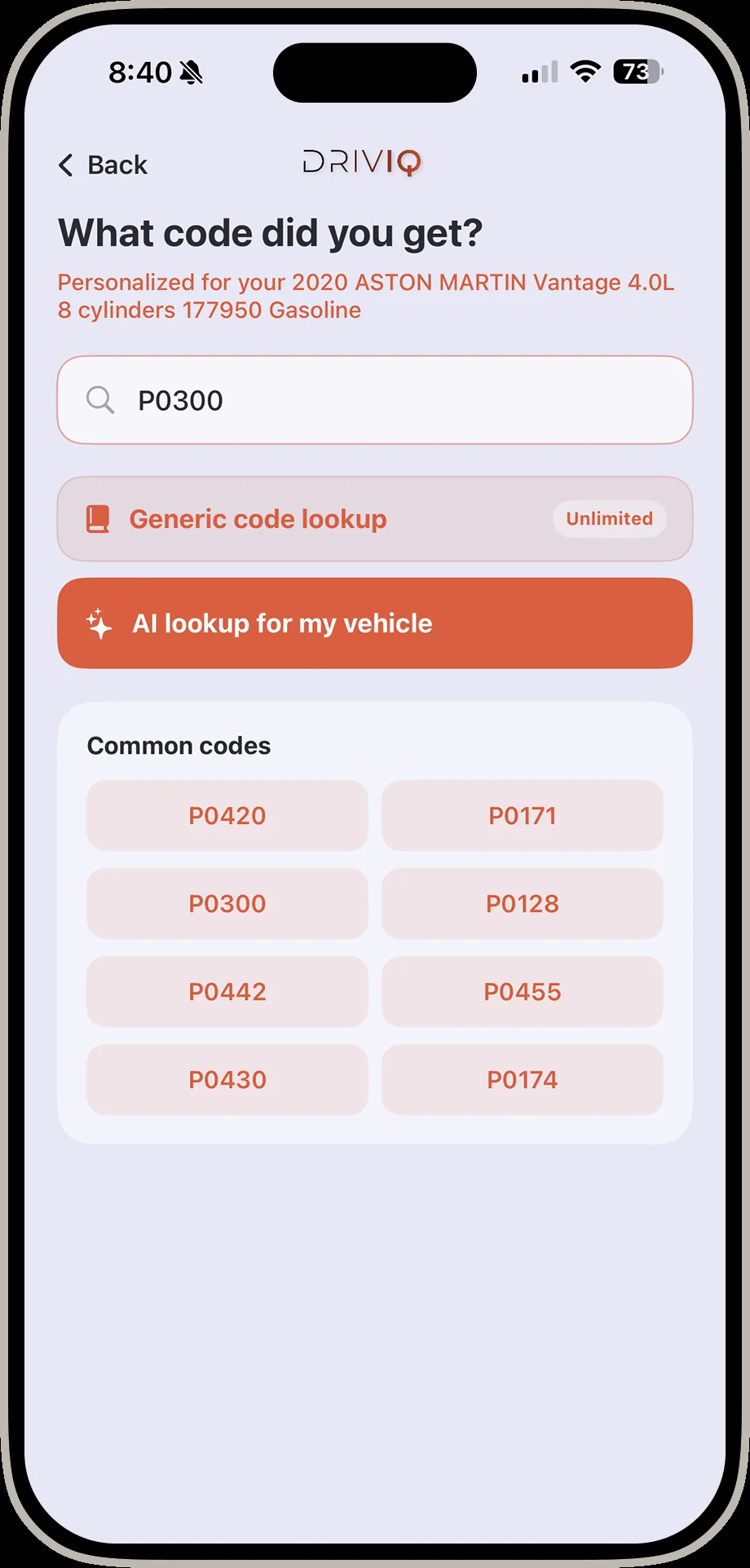
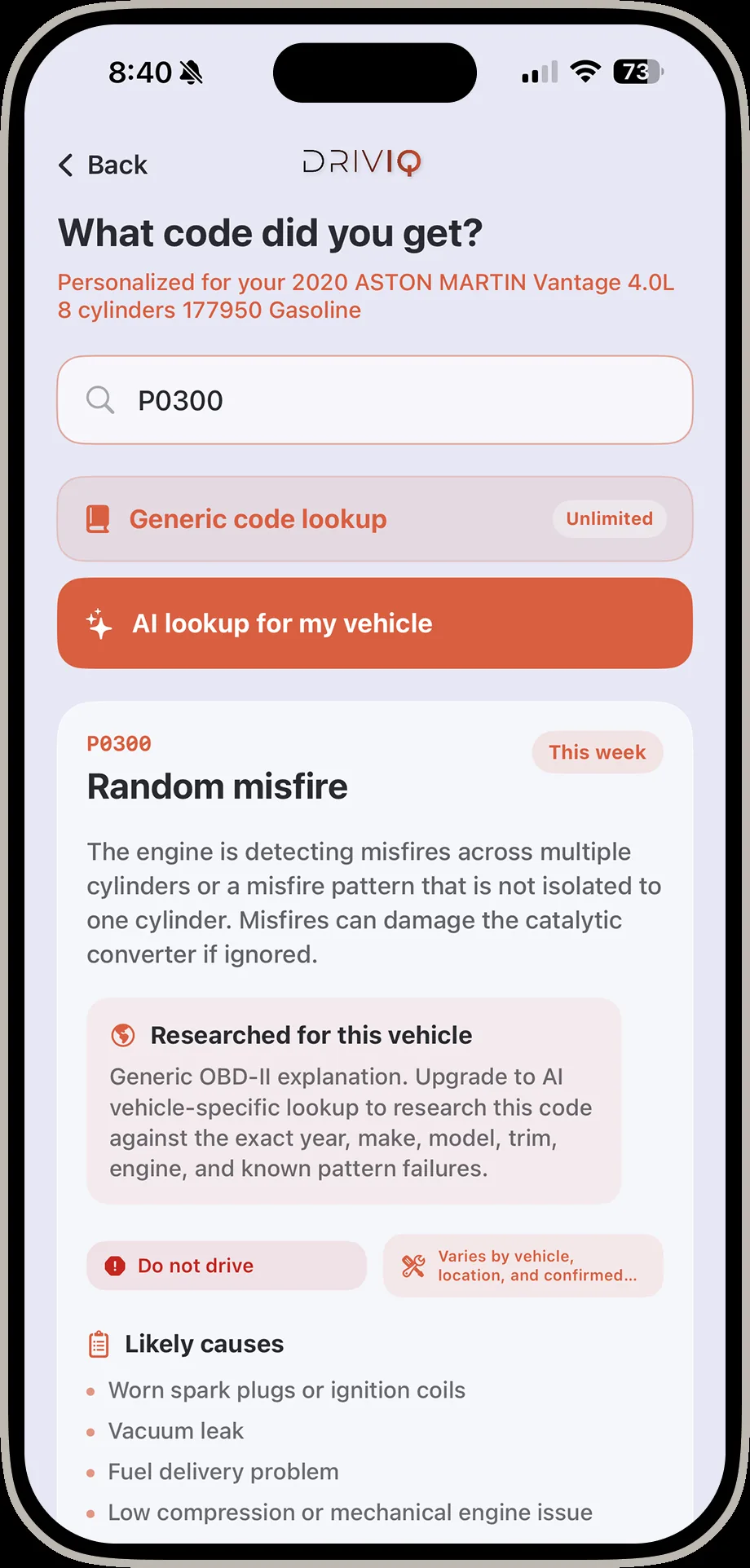
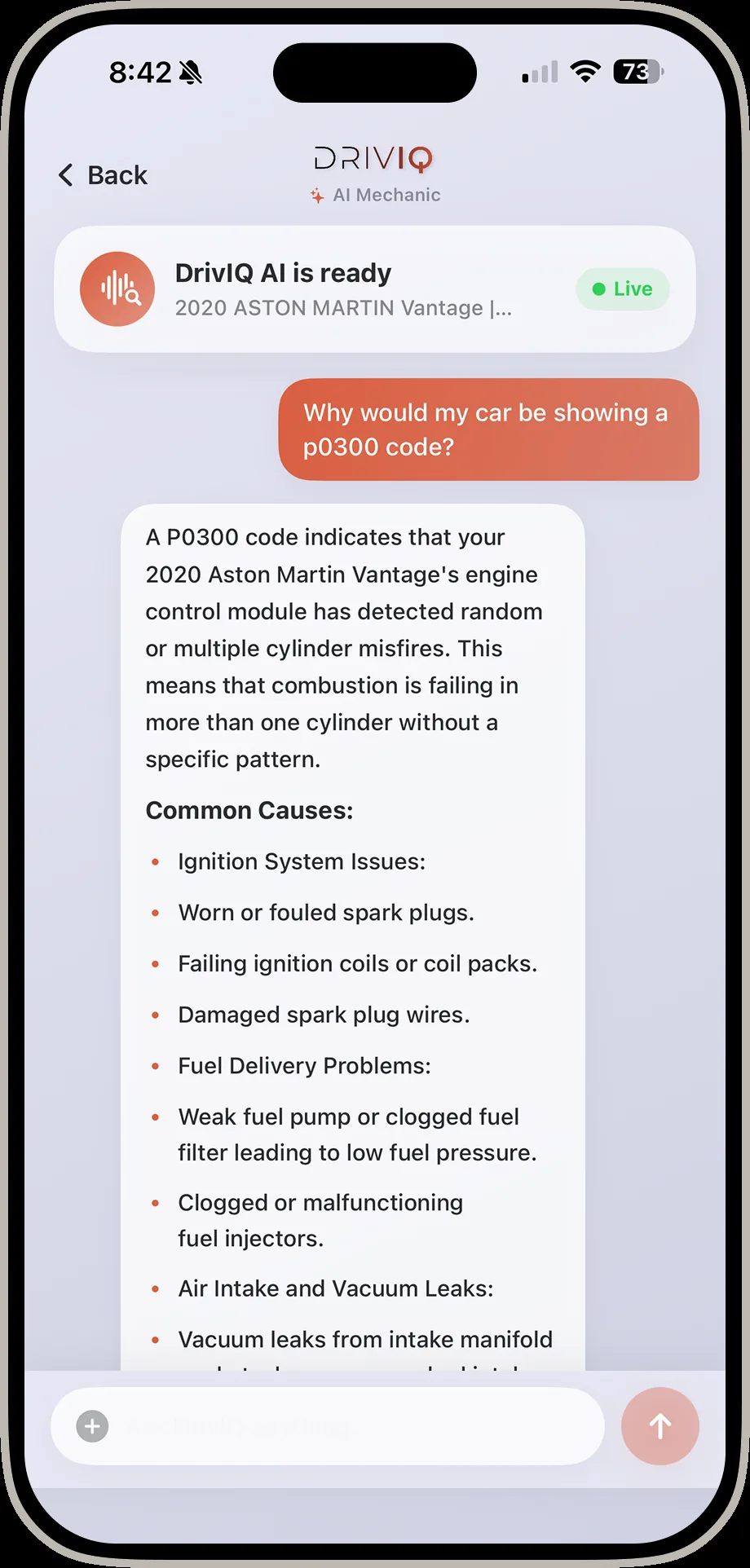
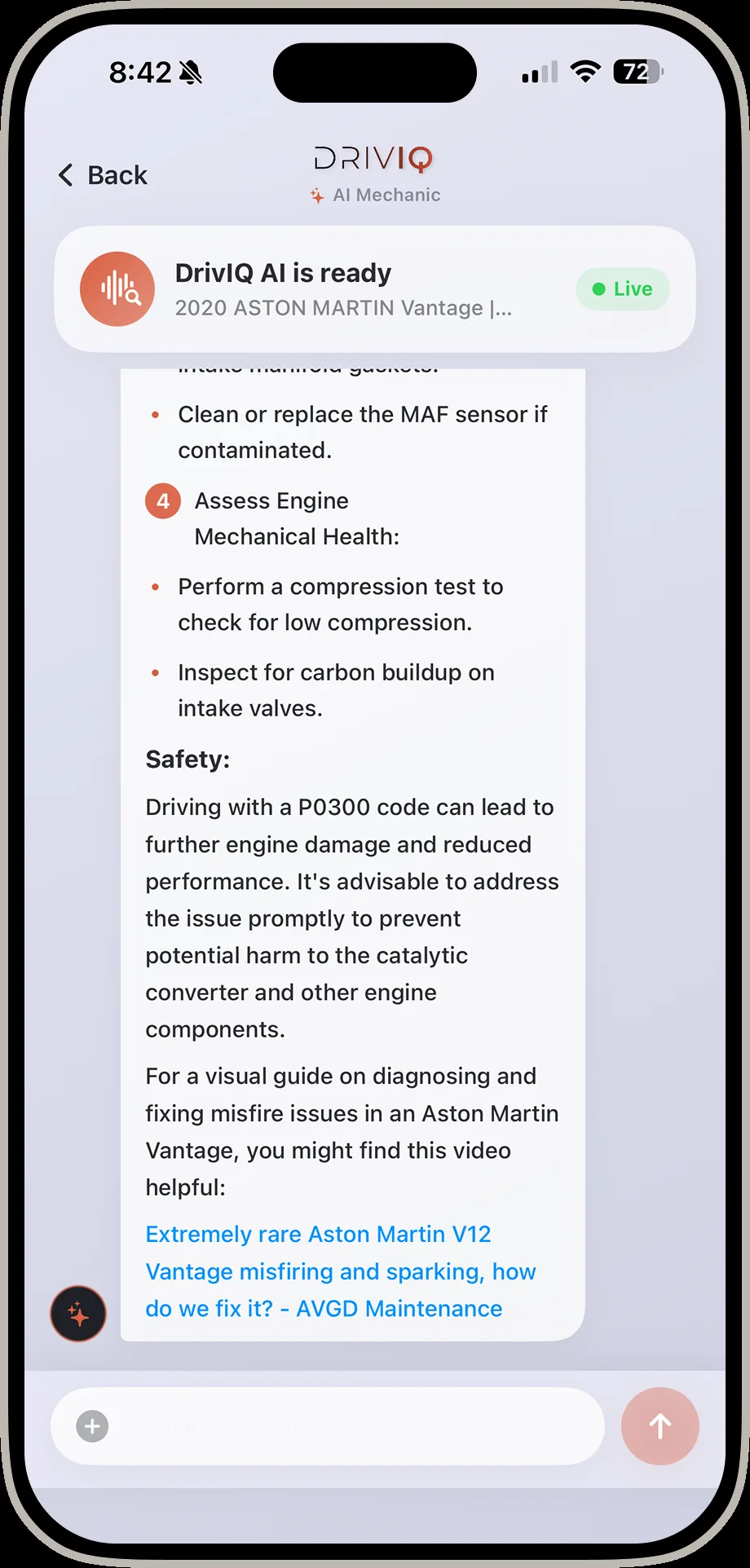
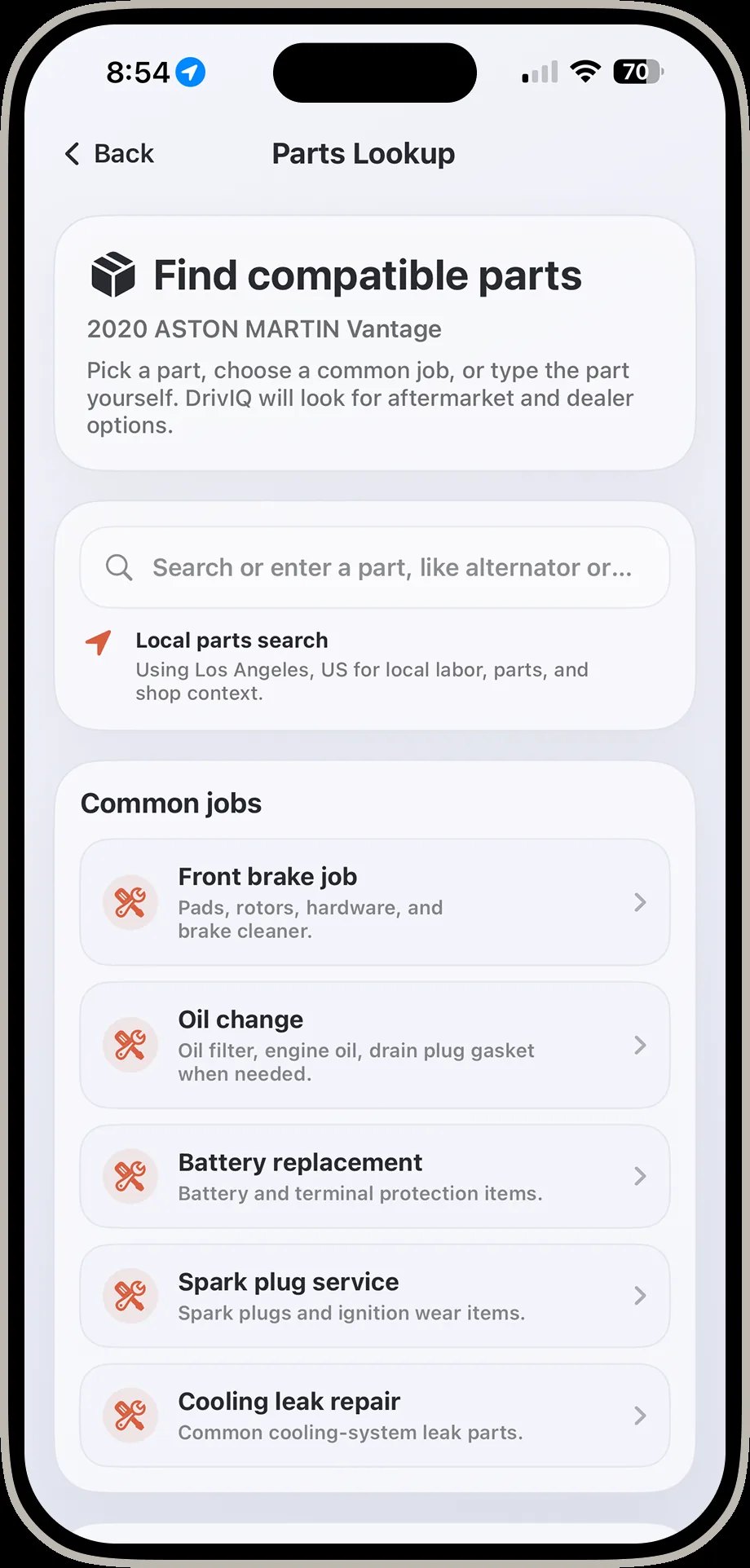
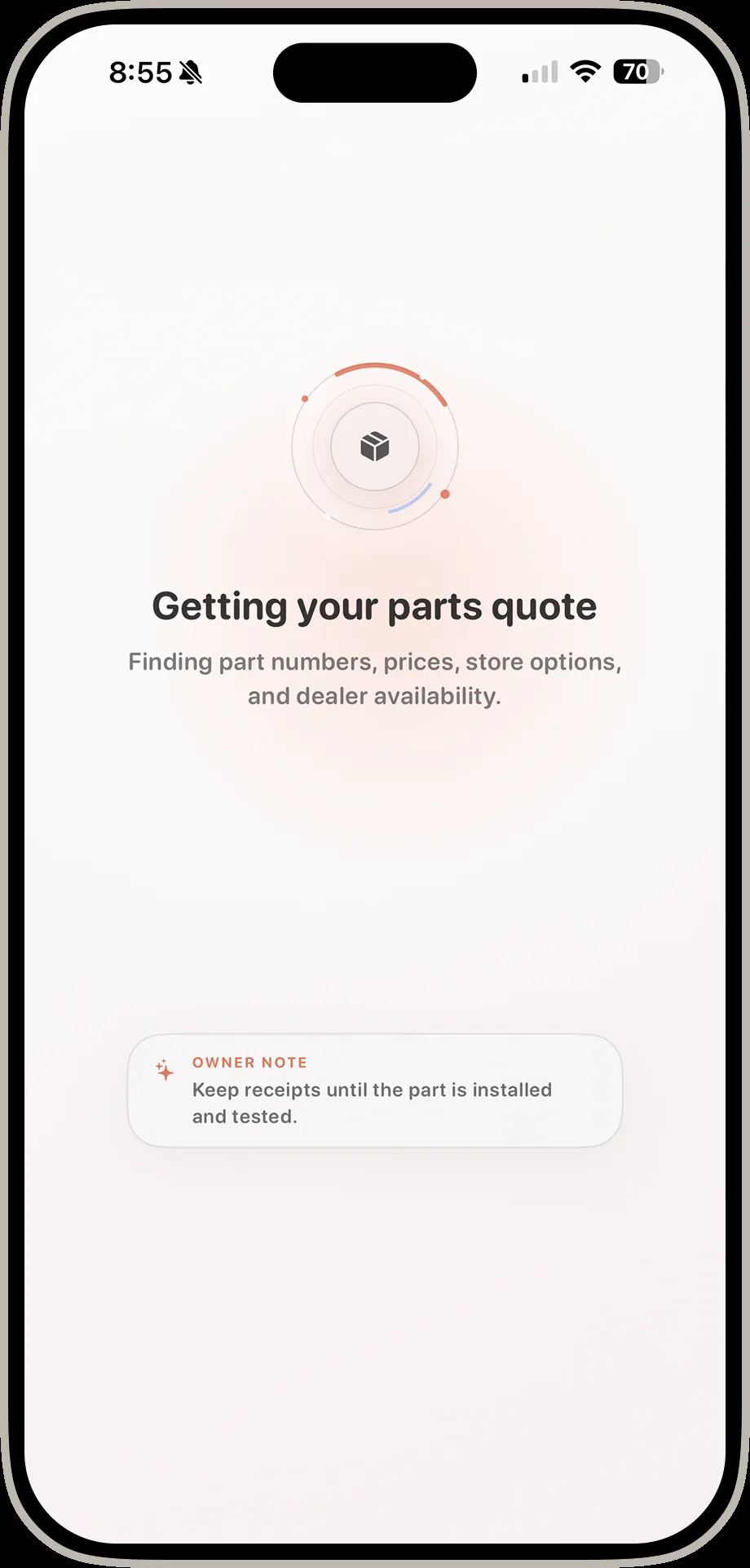
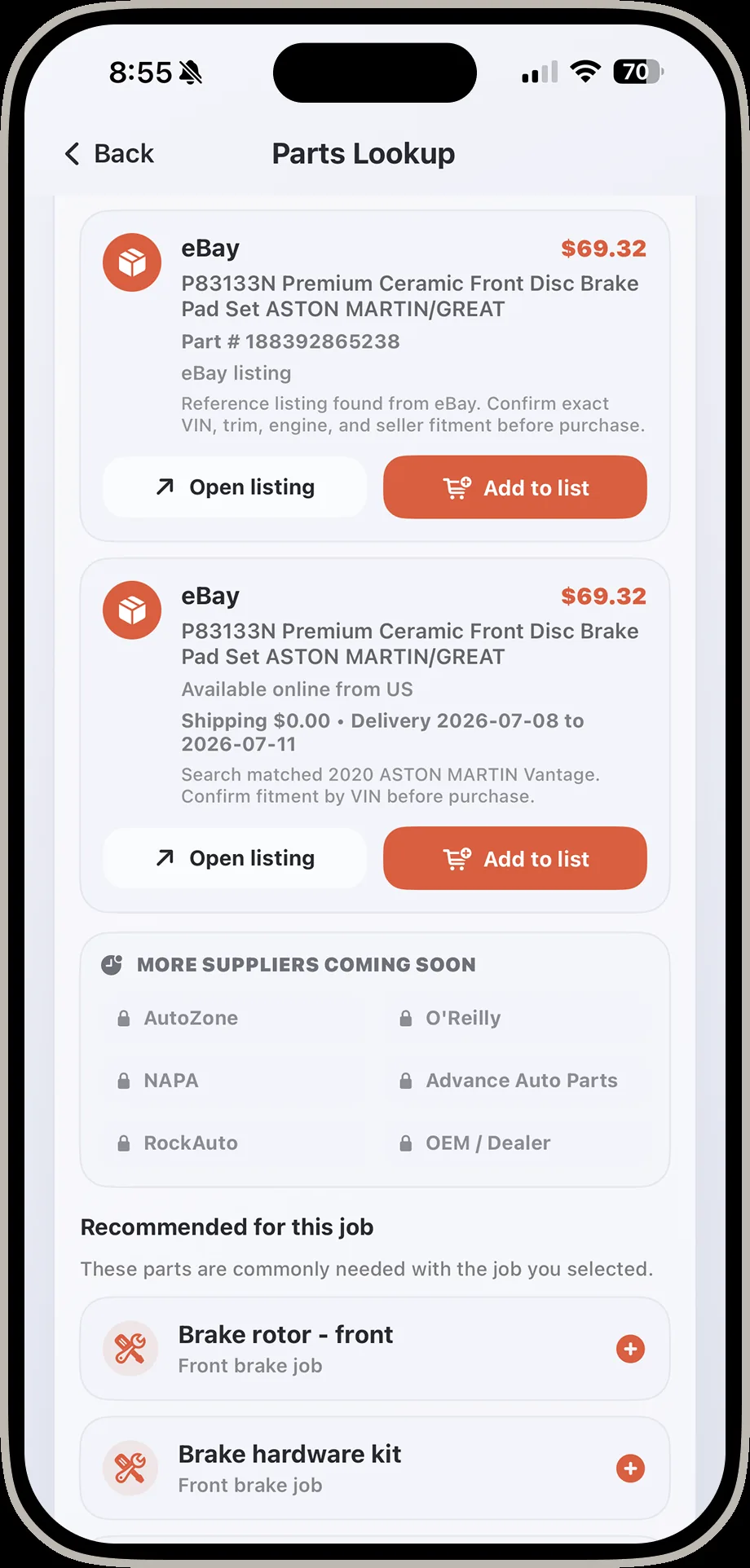
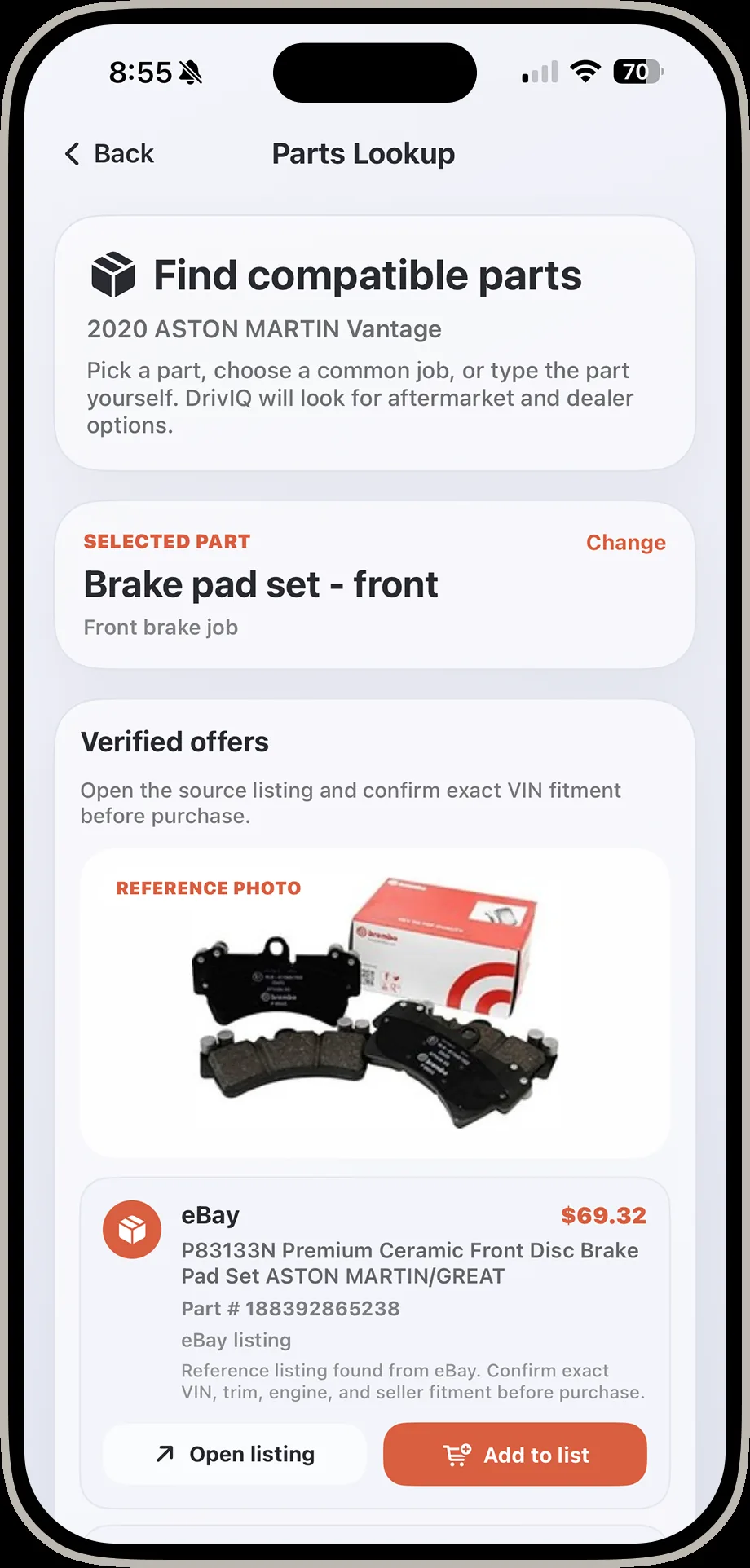
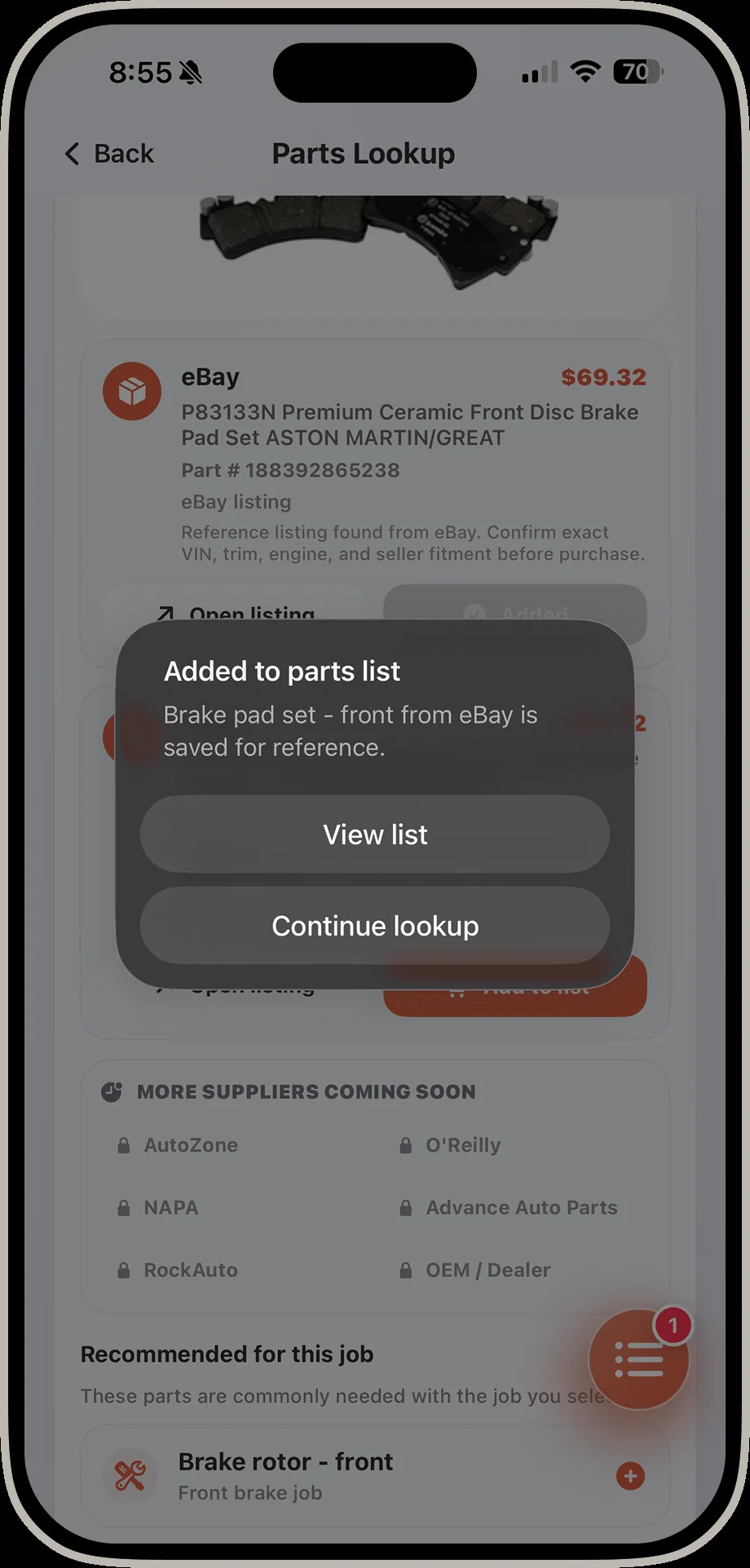
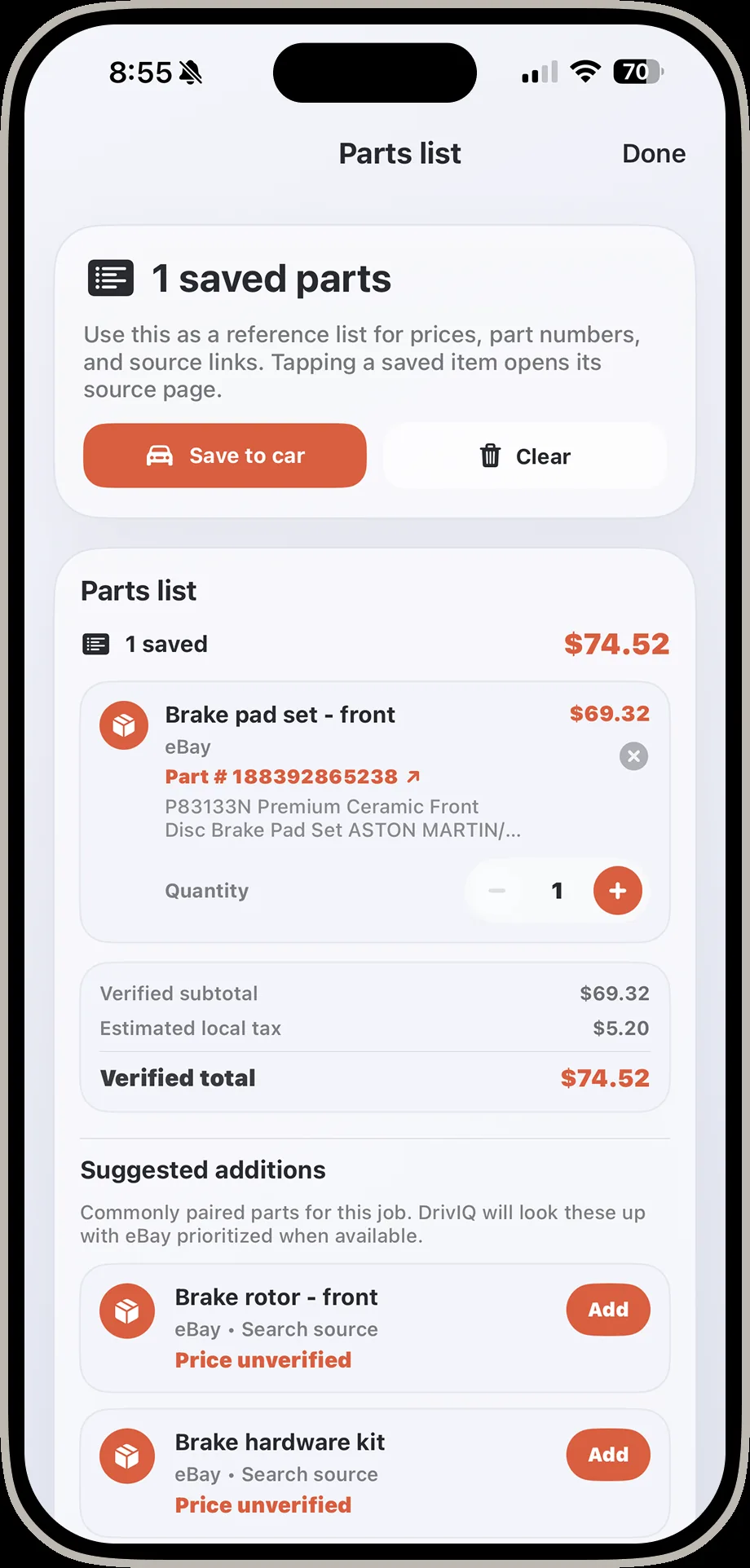
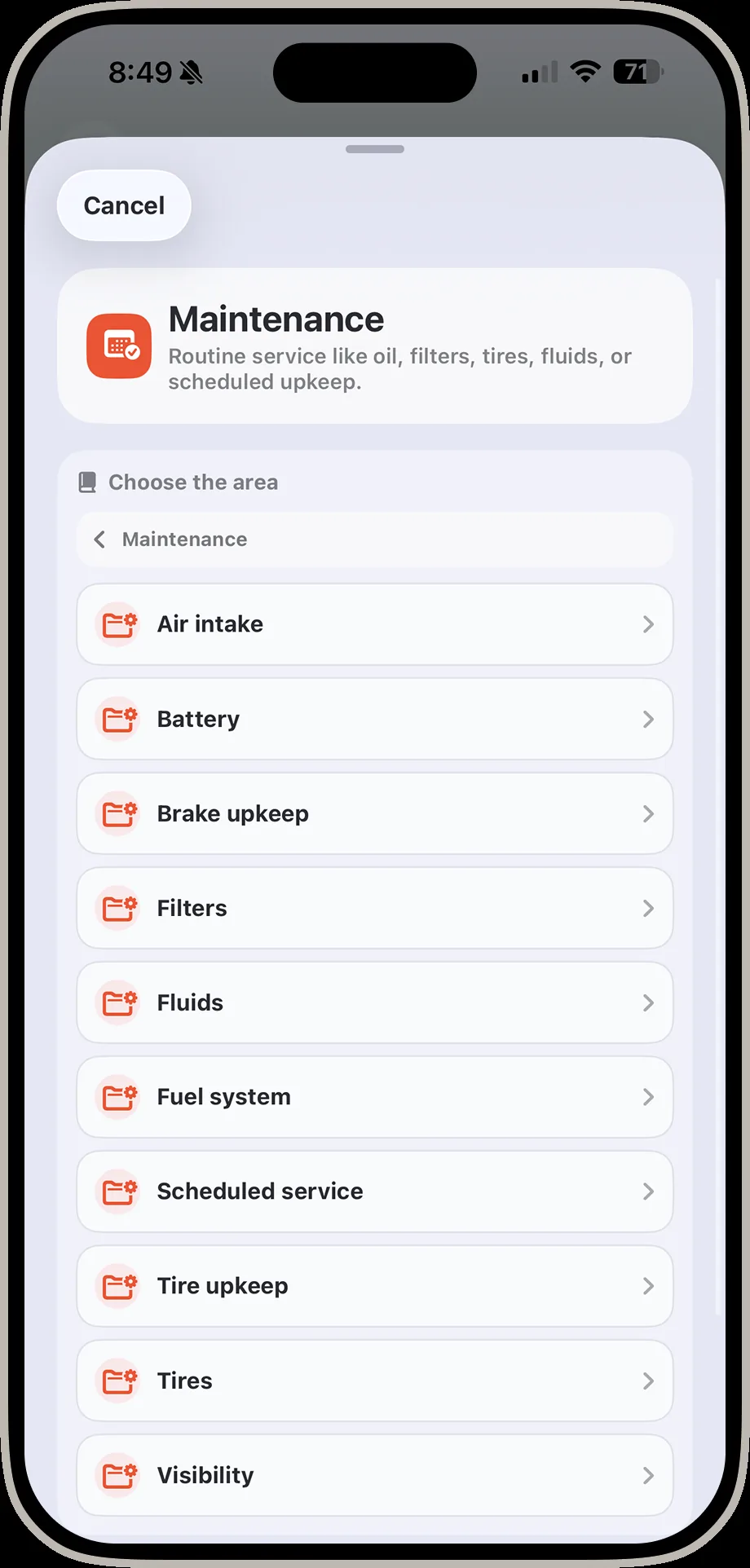
A 30,000-mile service on the 2020 Aston Martin Vantage — from "what's this going to cost me" to a shop-ready proposal with real shops, real ratings, and real contact details.
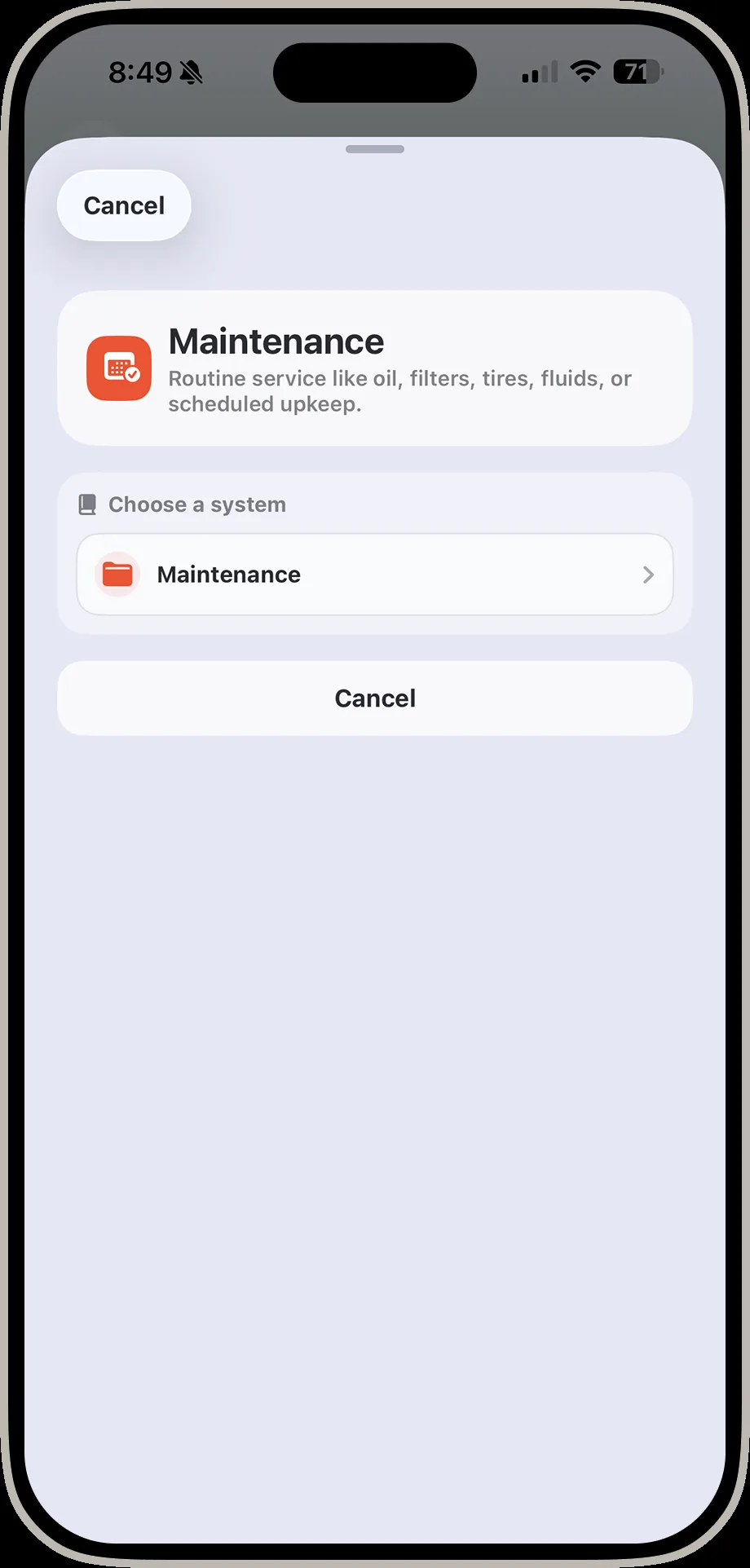
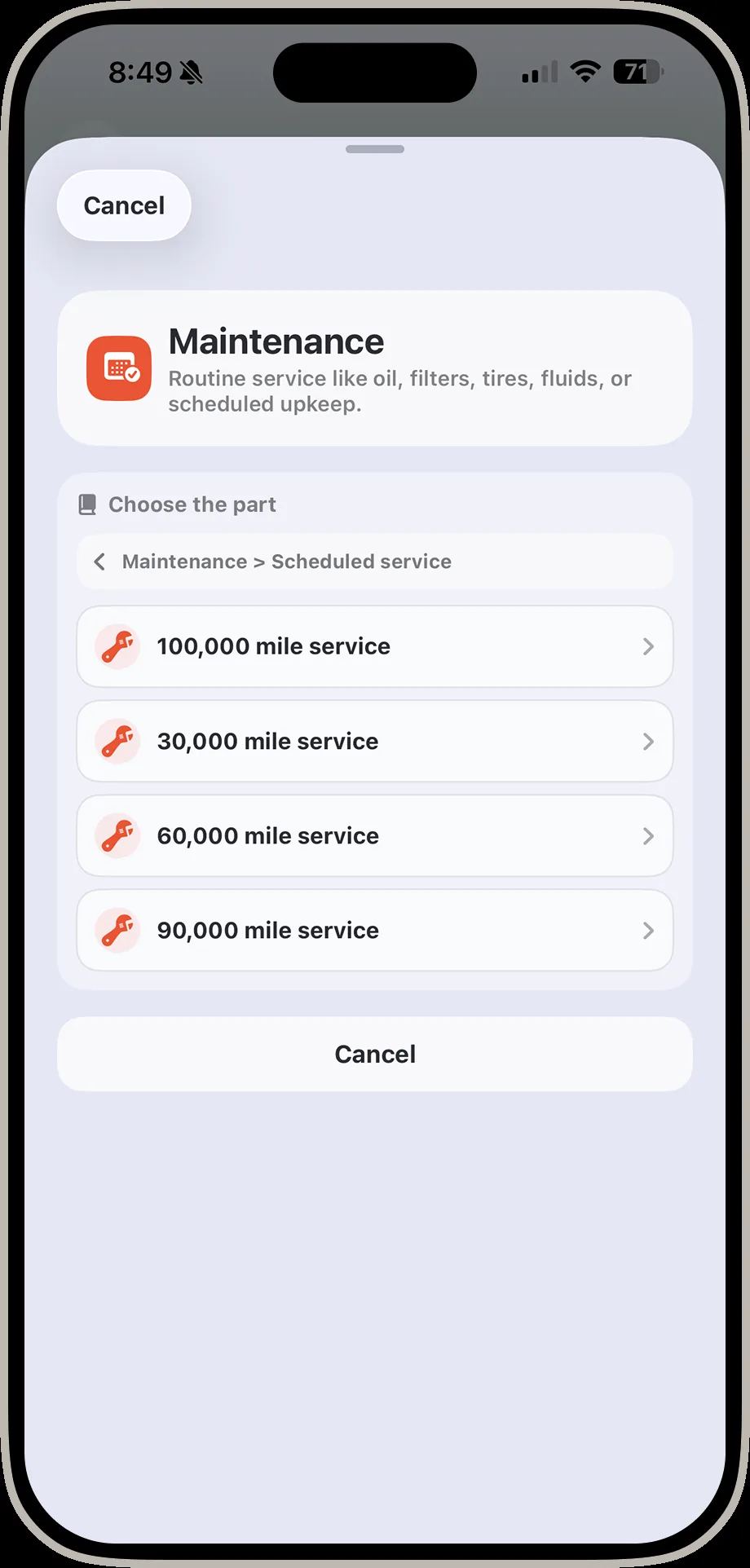
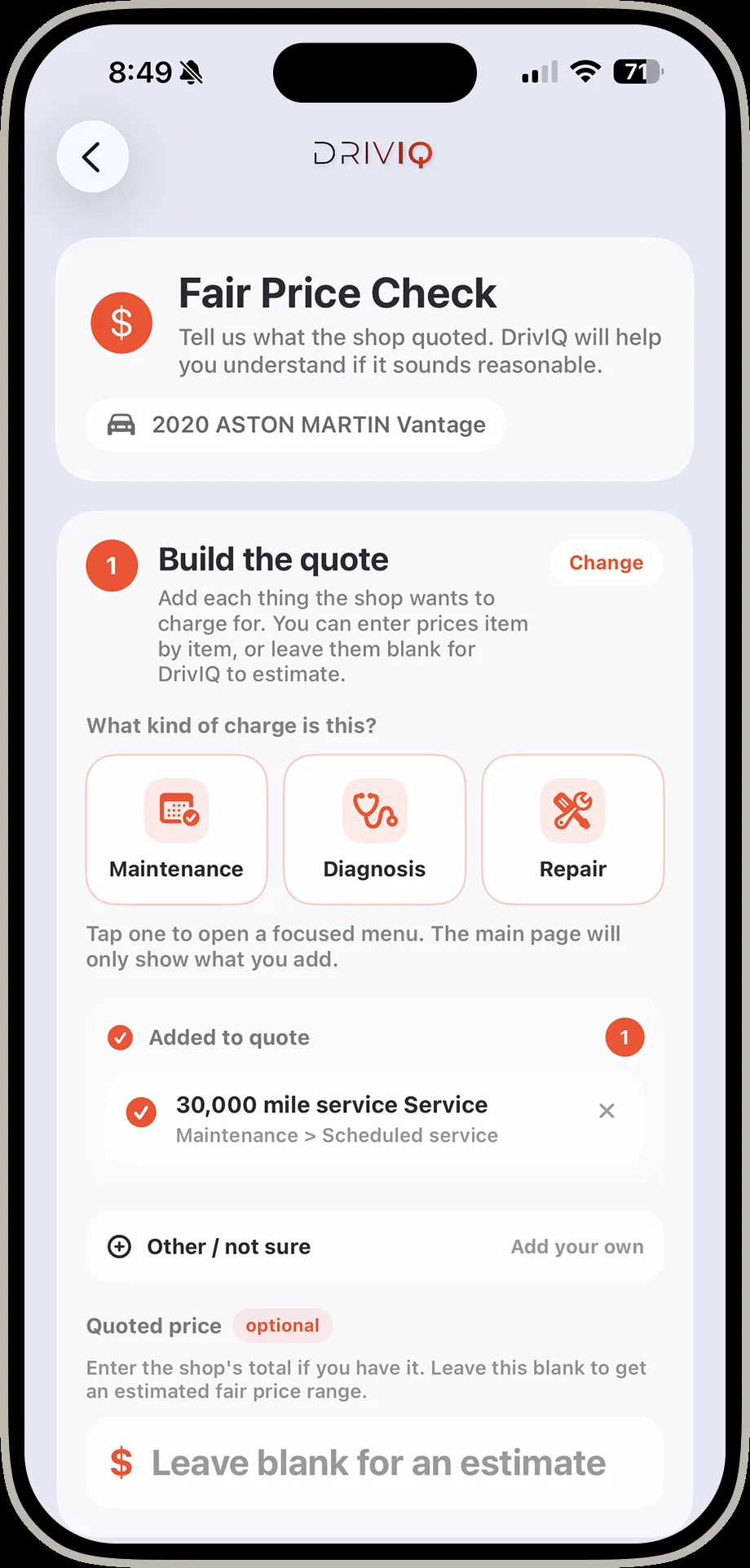
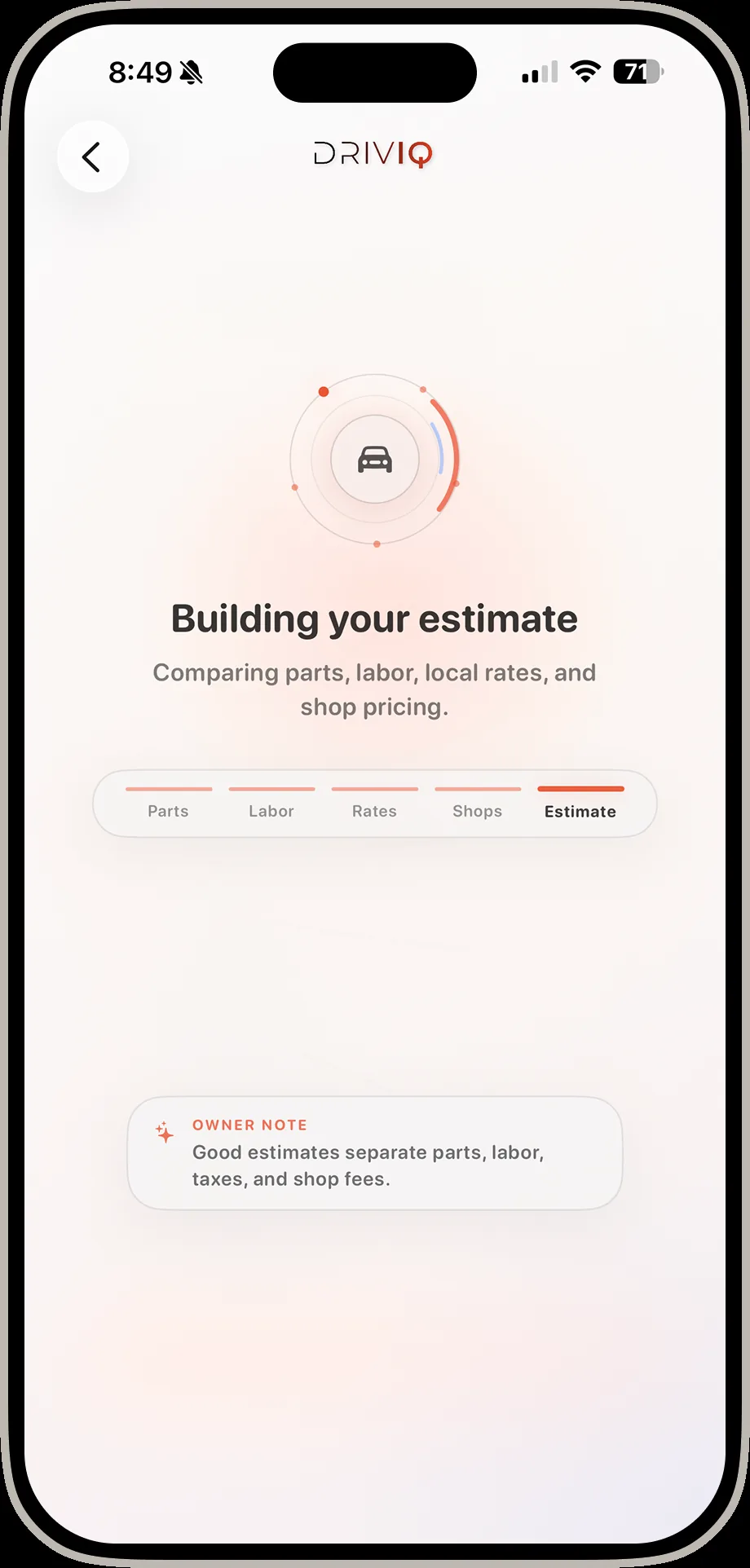
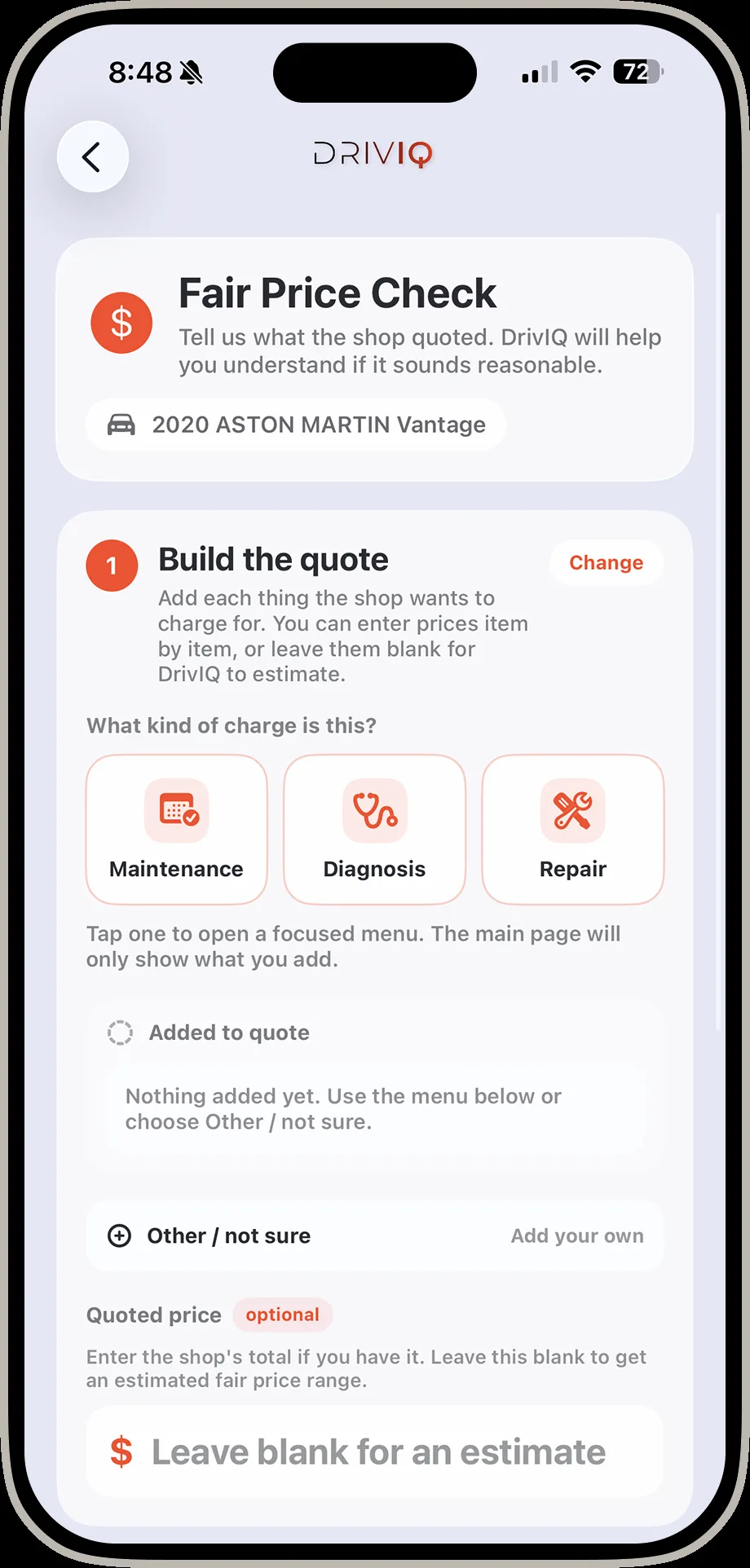
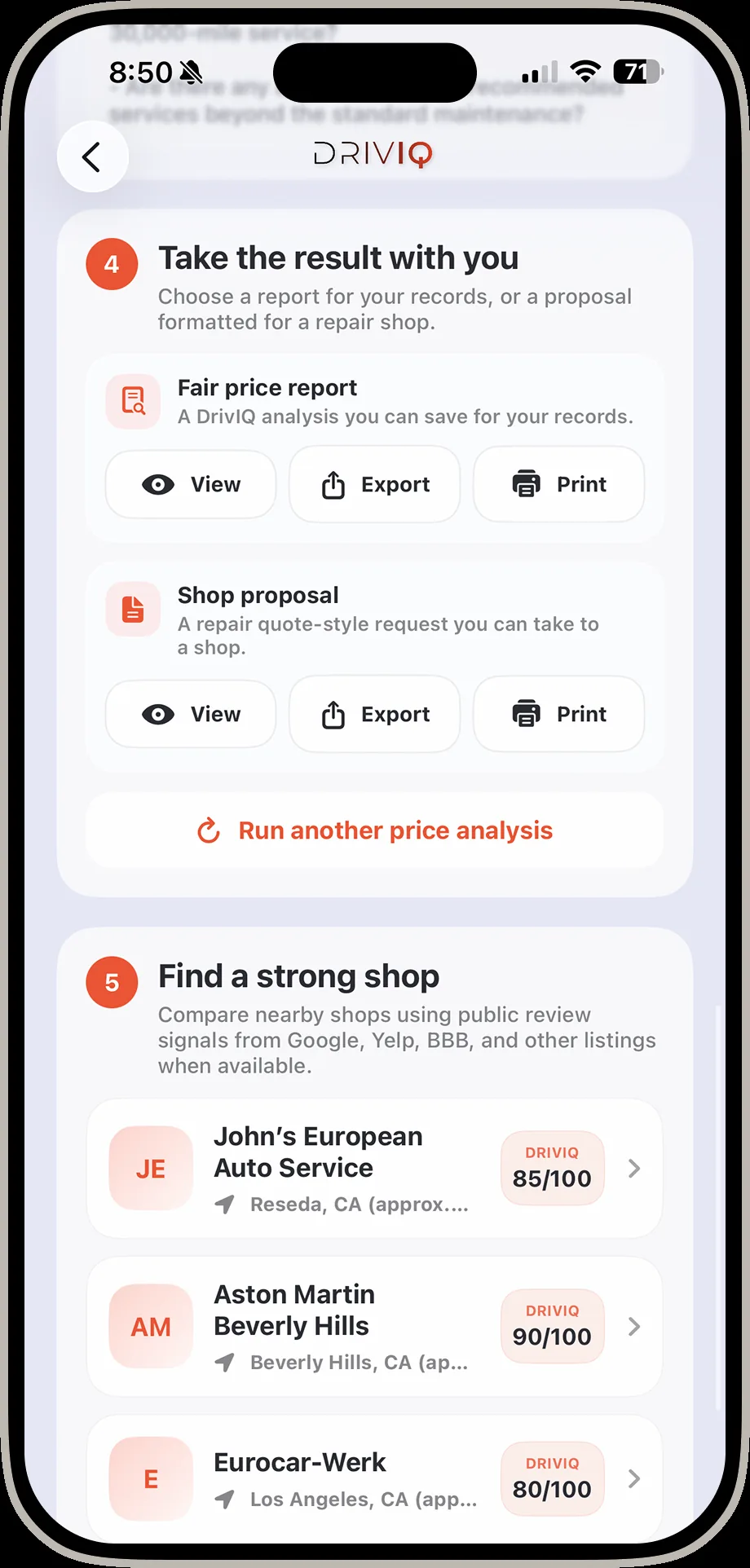
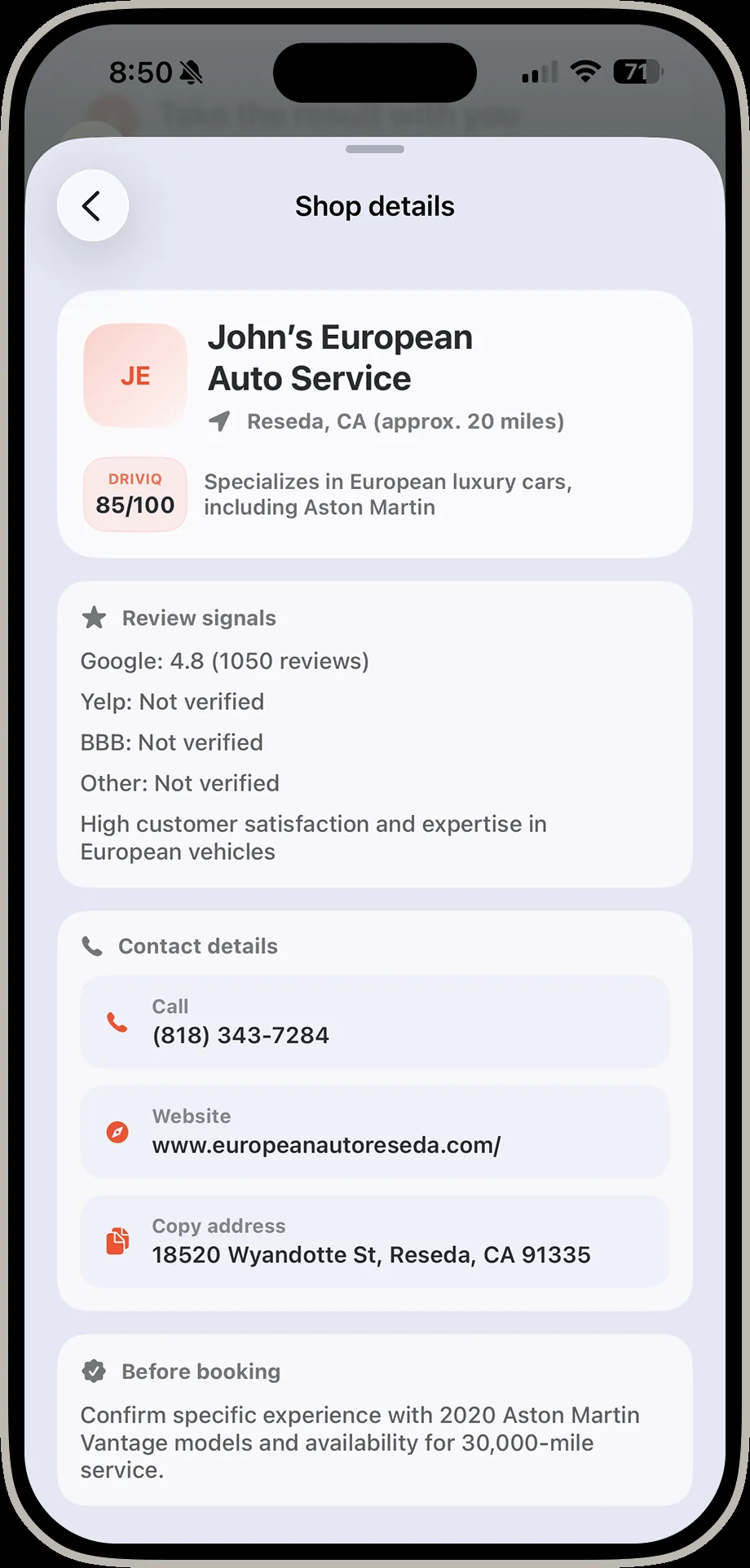
The goal is not to replace a qualified technician. The goal is to make the driver less blind before money changes hands.
 Report ready
This is the feature we're most excited about, and we want to be straight about where it stands: the footage on the right is a real, working prototype tracking a part live on an actual vehicle — not a render. It is not shipped in the app yet.
Live AR trackingThe prototype follows a selected part — here, an oil dipstick — as the camera moves around a real engine bay.
Built on real componentsComponent chips (oil dipstick, oil fill cap, battery terminal) are tied to markers tracked in 3D space, not a static overlay.
Why it mattersThe gap between "there's a code" and "I can find the part" is where most drivers give up. This closes it.
Shown for illustration of the direction we're building. Timeline and final feature set are not finalized. Want to follow progress or talk about it? Get in touch.
If something's still unclear after that, use the contact link below — a real answer beats a guess.
No. A compatible BLE OBD-II adapter (like a Veepeak) unlocks live scans, code reads, and vehicle-specific diagnostics, but you can add a vehicle, look up a code manually, run a fair price check, or search for parts without one.
Any car, truck, or SUV with a standard OBD-II port — virtually every vehicle sold in the US since 1996. Your garage can hold multiple vehicles, each with its own VIN, engine, and diagnosis history.
No. DrivIQ provides educational vehicle information and decision support so you're less blind before money changes hands. It does not replace certified repair, emergency service, inspection authorities, manufacturer guidance, or professional judgment.
DrivIQ compares the parts, labor hours, and local shop rates tied to your specific code and vehicle, then returns an estimated range with the reasoning behind it — plus follow-up questions worth asking the shop. It's a target for negotiation, not a guaranteed quote.
The free lookup gives you the same generic OBD-II explanation any code reader gives. AI lookup researches the code against your exact year, make, model, and engine — citing real service bulletins and known patterns for that vehicle, not just the code definition.
Your garage, scan history, and reports are tied to your account, not shared publicly. See the Privacy Policy for the full detail on what's collected and how it's used.
Yes. Any finding can become a Fair Price Report or a shop-ready Repair Proposal — both viewable, printable, and exportable as a PDF. See real examples above.
Not yet. The footage shown on this site is a real working prototype tracking a part on an actual vehicle, but AR Vehicle Assist is still in development and isn't available in the current app.
Working product. Every screen shown on this site — home, garage, scanning, reports, tools, code lookup, Ask DrivIQ, fair price, parts, and smog — is a real screenshot from the running iOS app, and the Fair Price Report and Repair Proposal PDFs are real generated output, not mockups. AR Vehicle Assist is the one clearly-labeled exception: a working prototype, not yet shipped.
Most code readers stop at a generic definition. DrivIQ researches the code against the specific vehicle, cites service bulletins and sources, prices repairs against real local labor and parts data, and helps find the part or the shop — then packages the whole thing into a document a shop will actually take seriously.
DrivIQ is currently in early access while the core product is validated with real drivers. The clearest paths we see are premium diagnostics, parts and repair-shop referral partnerships, and shop-facing tools built on the same data — happy to go deeper on specifics directly.
DrivIQ is built by R.E. Labs LLC. For team background, roadmap detail, or a live walkthrough, reach out directly — that conversation is more useful than anything we could summarize here.
Email rob@driviq.tech directly, or use the contact link below. Real conversations beat a pitch deck.
Want to test new features before everyone else gets them? Email us and we'll get you set up.